
Camino de Santiago: Short Edition
Camino de Santiago: Short Edition
Price to be announced
International flights not included
Have a question about this trip?
Price to be announced
What awaits you
Camino de Santiago
On the European continent there is a trail that every keen hiker must walk, a legendary route: Spain's Way of St James (Camino de Santiago).
The route dates back to the Middle Ages. Tradition has it that one of the twelve apostles of Jesus, St James, is buried in Santiago de Compostela Cathedral in Spain, which therefore became an important holy place of Catholicism and has drawn countless keen hikers who come on pilgrimage in a spirit of reverence.
The Camino has several classic routes, each with a long history. The best known include:
The French Way (Camino Francés): the most classic and most popular route. It starts from Saint-Jean-Pied-de-Port in France, crosses the Pyrenees and finally reaches Santiago de Compostela Cathedral; about 780 kilometres long, it is the first choice of most pilgrims with plenty of time.
The Northern Way (Camino del Norte): this route follows the north coast of Spain, with magnificent scenery and many charming seaside towns along the way; it is a longer route, about 800 kilometres, suited to hikers looking for a challenge.
The Silver Route (Vía de la Plata): this route starts in Seville in southern Spain and heads north along an ancient Roman road, past a wealth of cultural sites and natural landscapes; about 1,000 kilometres long, it is relatively little walked but steeped in history.
The Portuguese Way (Camino Portugués): this route starts from Porto in Portugal and passes through beautiful vineyards and the region of Galicia; about 260 kilometres long, it is a picturesque route suited to a shorter walk.
The Original Way (Camino Primitivo): regarded as the oldest of the pilgrim routes, it starts in Oviedo in the region of Asturias; the scenery is beautiful and the terrain rather challenging, over a total of about 320 kilometres.
Among the many Camino routes, we have carefully planned a 7-day trip starting from Sarria and covering the final 118km of the French Way (Camino Francés). We take you deep into this path of the spirit, where faith and courage go together, to experience its most classic and most breathtaking journey through nature and history. It is also the most popular route, and the one on which the official pilgrim certificate in Latin can be obtained in the shortest time.
Our design
The final 118 km, a certificate in Latin
For anyone wanting to spend a week on the Camino and receive the pilgrim certificate in person, we have condensed the trip into the final 118km of the French Way, starting from Sarria: the most classic stretch, and the route on which the official pilgrim certificate in Latin can be obtained in the shortest time.
A classic stretch | Camino × Heritage
From the flagstone streets of Sarria, past 12th-century Romanesque churches and bridges, the famous "100-kilometre pilgrim marker stone" and Monte do Gozo, through the "Pilgrims' Gate" into Praza do Obradoiro and Santiago de Compostela Cathedral.
Double rooms throughout | Rest × Privacy
5 nights in star-rated hotels or guesthouses and 1 night in a boutique guesthouse, double rooms throughout: we forgo the crowded pilgrim hostels and noisy dormitories, avoiding bed bugs as far as possible.
Travelling light | Bags × Steps
A luggage transfer for your duffel bag throughout the trek (1 bag of up to 15kg per person), so you set off light, carrying the essentials for the day's walk, and enjoy the pleasure of the pilgrimage to the full.
A small group | Group × Guide
A small group of 6 to 10 people with 1 foreign mountain leader, away from the noise of large groups and meeting like-minded companions.
This is the Camino de Santiago: Short Edition, where a pilgrim passport full of stamps becomes a certificate in Latin bearing your own name.
A thousand years of history and cultural heritage
The Camino de Santiago, one of the three great holy places of Christianity, has a history of more than a thousand years. The discovery of the remains of St James in AD 814 established its religious standing, and the medieval Codex Calixtinus further enriched its cultural and spiritual significance. The route is listed by UNESCO as a World Cultural Heritage site, and the medieval churches, monasteries and villages along it are both symbols of faith and witnesses to cultural exchange in Europe.
A unique walking culture
The Camino is a unique walking experience. The "Buen Camino (have a good journey)" that pilgrims exchange in greeting, and the warmth of the hostels and local people along the way, fill this route with human kindness. Everyone arrives with their own purpose and their own cares, finds understanding through sharing, and sees strangers become close friends. As the legendary spirit of the pilgrimage has it, "Every lonely heart can find a warm home on the way."
Santiago de Compostela Cathedral
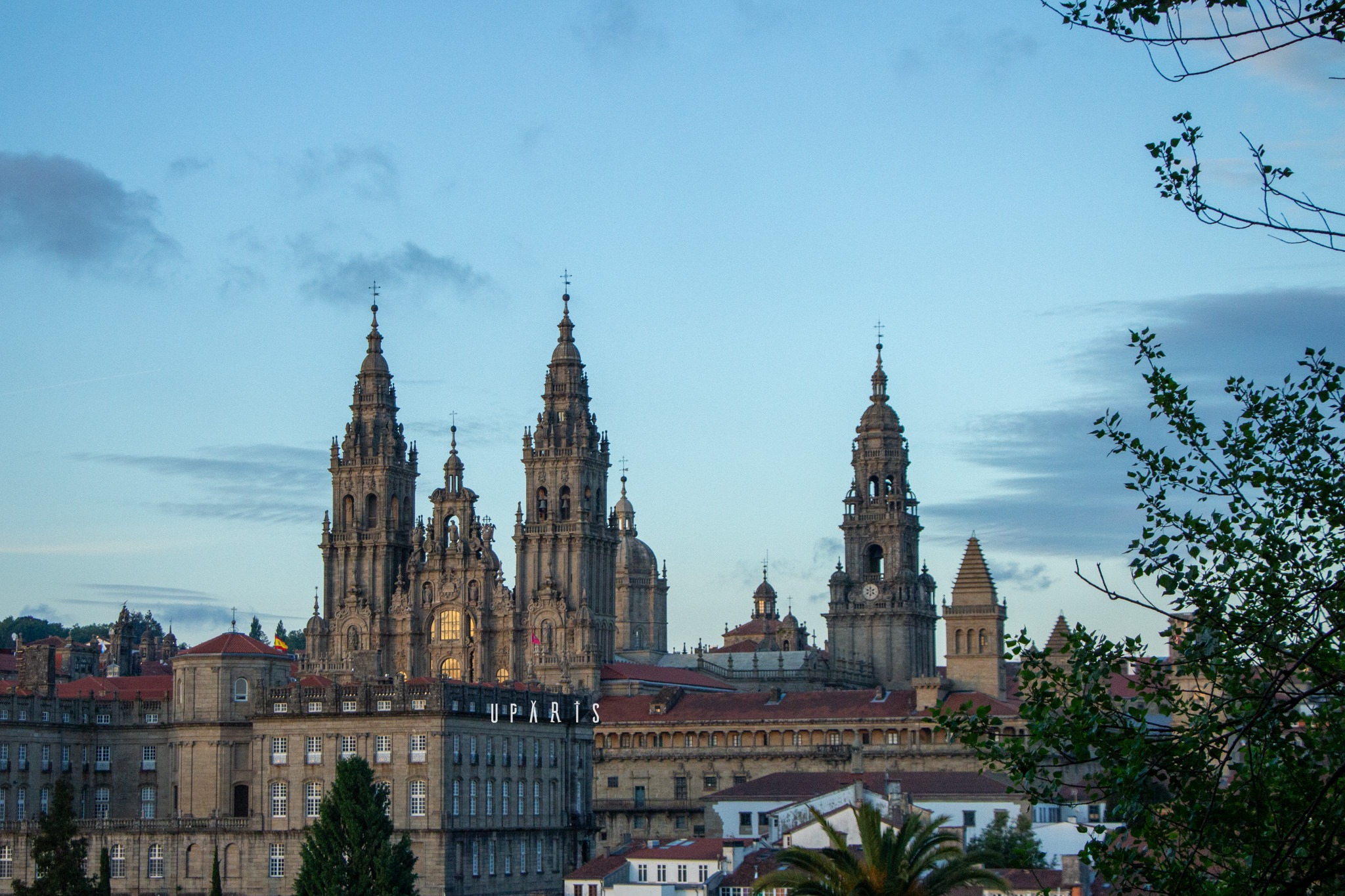
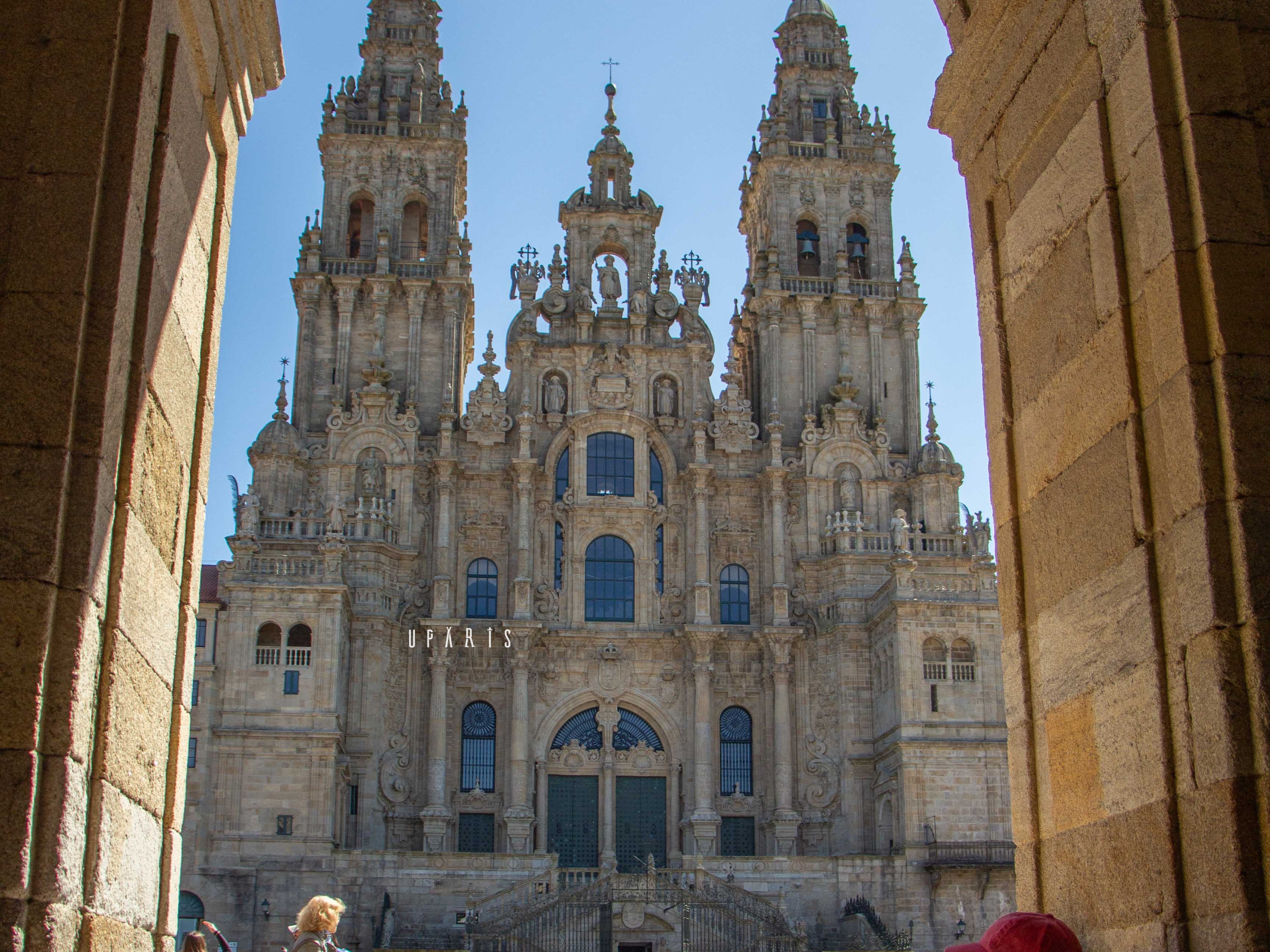
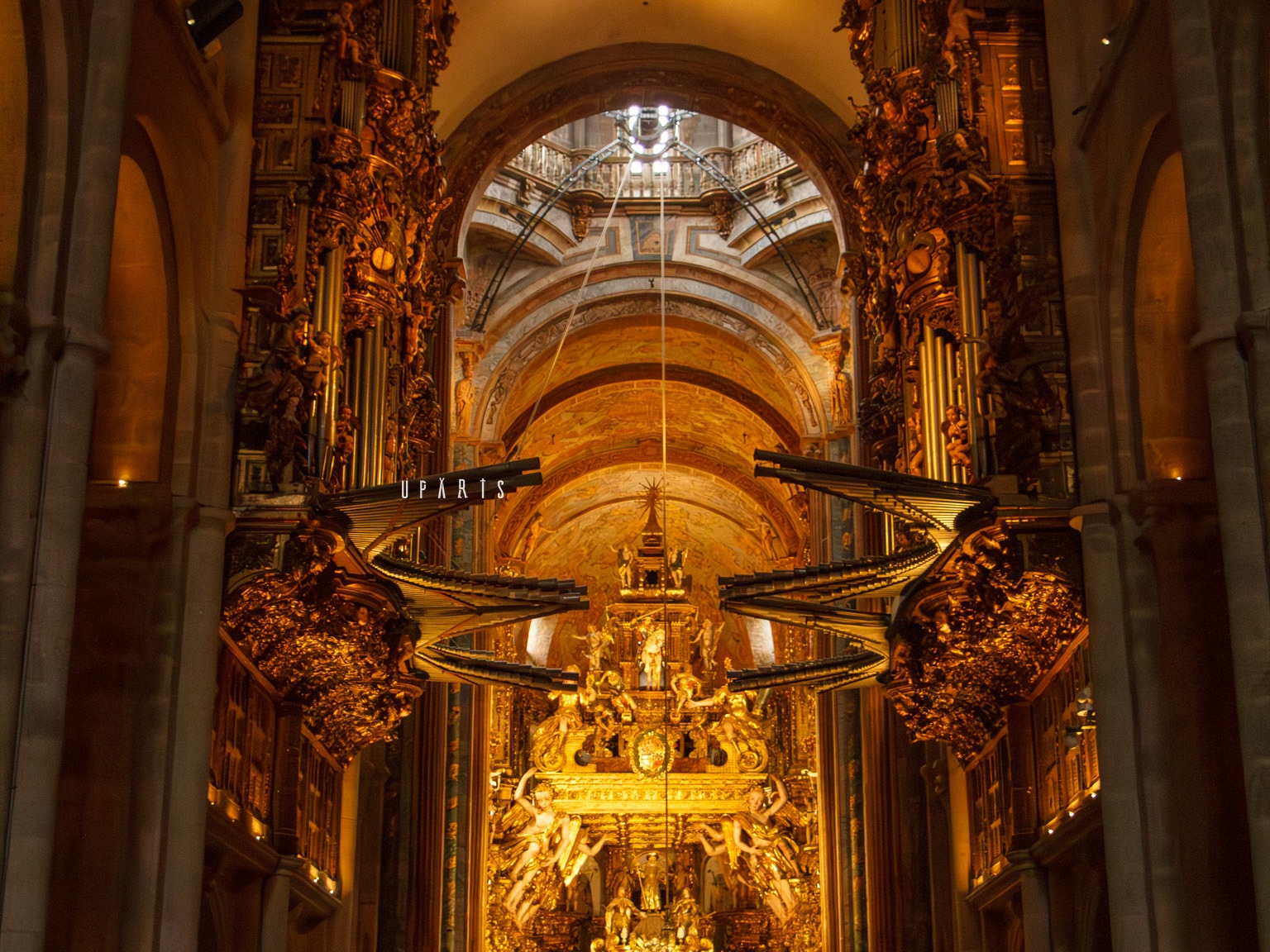
Santiago de Compostela Cathedral is one of the holy places of Christianity and stands at the end of the Camino. First built in the 9th century, the cathedral blends Romanesque, Gothic and Baroque styles: the façade is exquisitely carved, majestic and magnificent; inside, the tomb of St James has an air of solemnity, and the stirring spectacle of the swinging censer (Botafumeiro) is more unforgettable still. At each ceremony the censer swings through the air and its fragrance fills the whole cathedral, bringing a sense of the sacred that transcends time and space.
Pilgrim passport and certificate
The stamps in the pilgrim passport (Credencial del Peregrino) record every stage of the journey, and the pilgrim certificate (Compostela) received at the end symbolises perseverance and achievement. This is a journey across time and space, on which every walker finds a deep connection between one person and another, between people and nature, and with their own inner self.
The Galician countryside
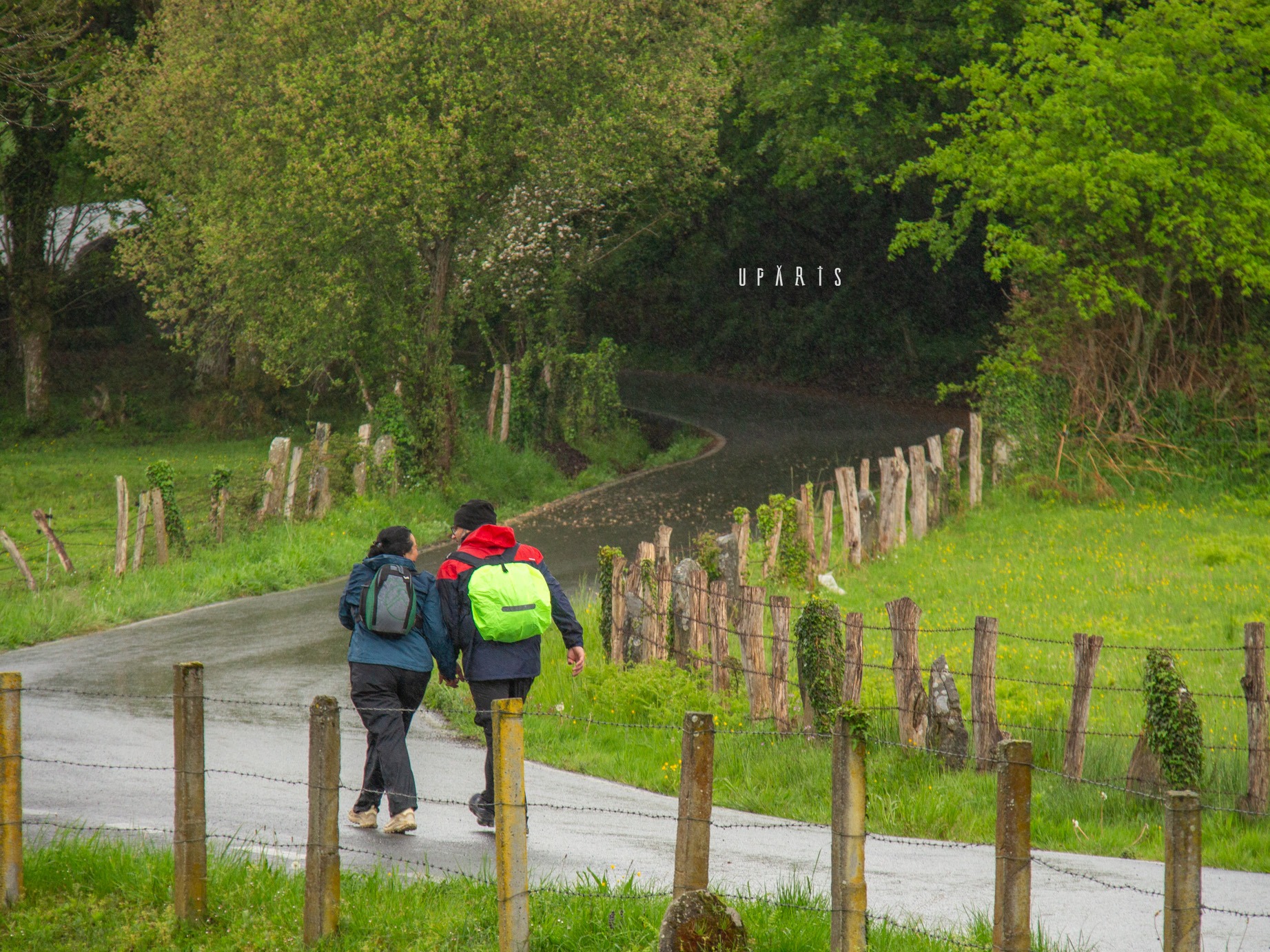
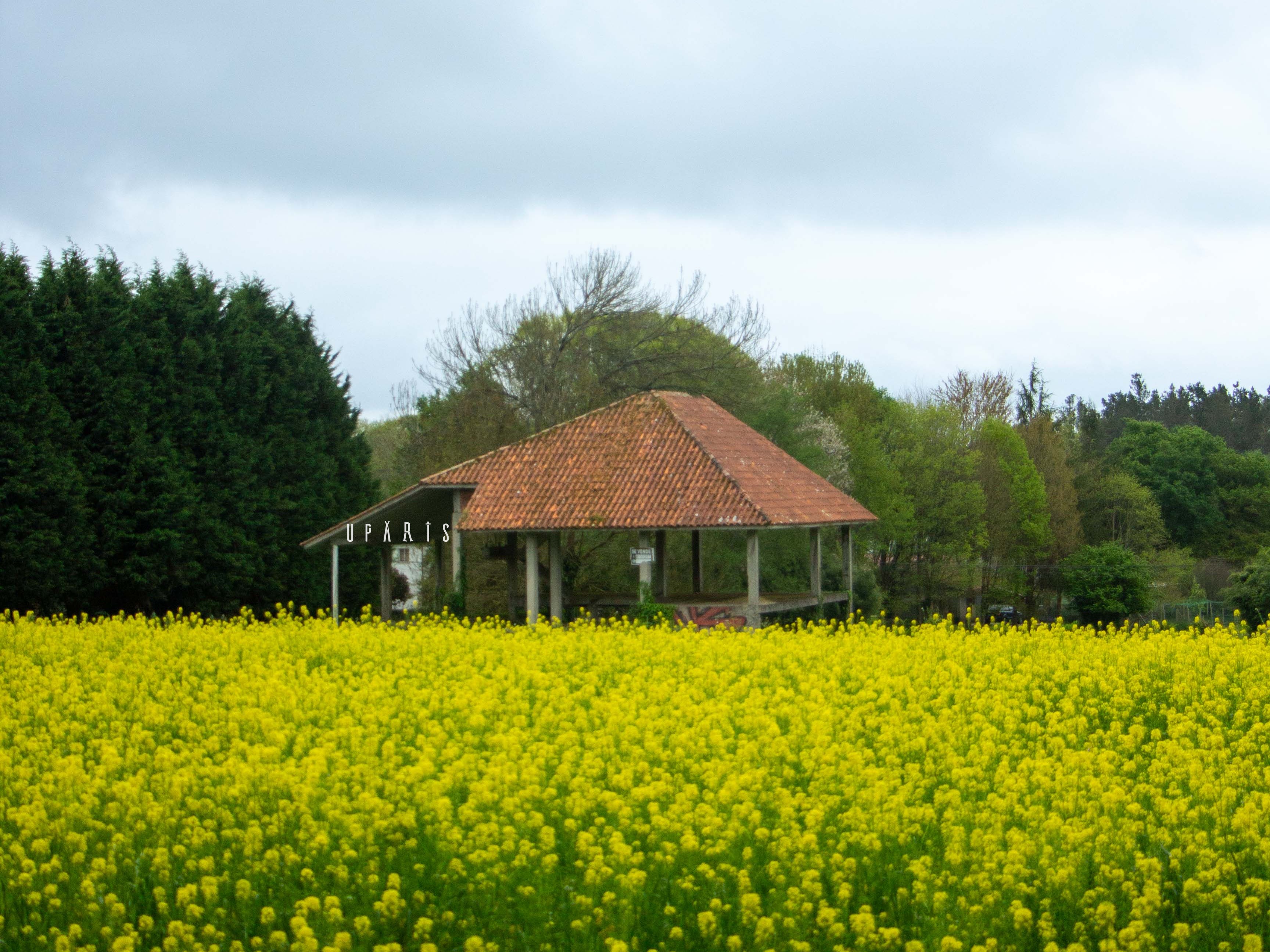
Galicia is known for its lush forests, rolling hills and ancient villages, and has been called the "oasis" of Spain. Where the Camino passes through, emerald fields, quiet pastures, stone bridges and streams set one another off, sketching a peaceful and poetic pastoral scene.
Where morning mist and sunlight meet, the villages sleep peacefully, people work in the fields and cows wander the pastures; everything has a simple, natural air. The ancient churches and crosses standing along the way bear witness to the history and faith of this land.
Comfortable accommodation
Our trip has been specially arranged with double rooms throughout. We forgo the crowded pilgrim hostels and keep away from noisy dormitory rooms, avoiding bed bugs as far as possible and giving you a comfortable, clean place to rest.
Hiking with a light pack
So that you can concentrate on walking and enjoying the scenery, free of any unnecessary load, we specially provide a luggage transfer for your duffel bag throughout the trek. All you have to do is set off light, carrying the essentials for the day's walk, and enjoy the pleasure of the pilgrimage to the full.
Travelling in a small group
You travel in a small group of 6 to 10 people, away from the noise of large groups, with ample time and space for an in-depth experience and for meeting like-minded companions: travel made easy.
No account needed. Thank you for your review: every piece of feedback helps us keep improving our routes and your experience.
Route map
The whole route at a glance
- Days7 days · 5 hiking stages
- Distanceabout 118 km
- Highest point566 m
Day by day programme
Discover each stage of your adventure
Meeting in Sarria
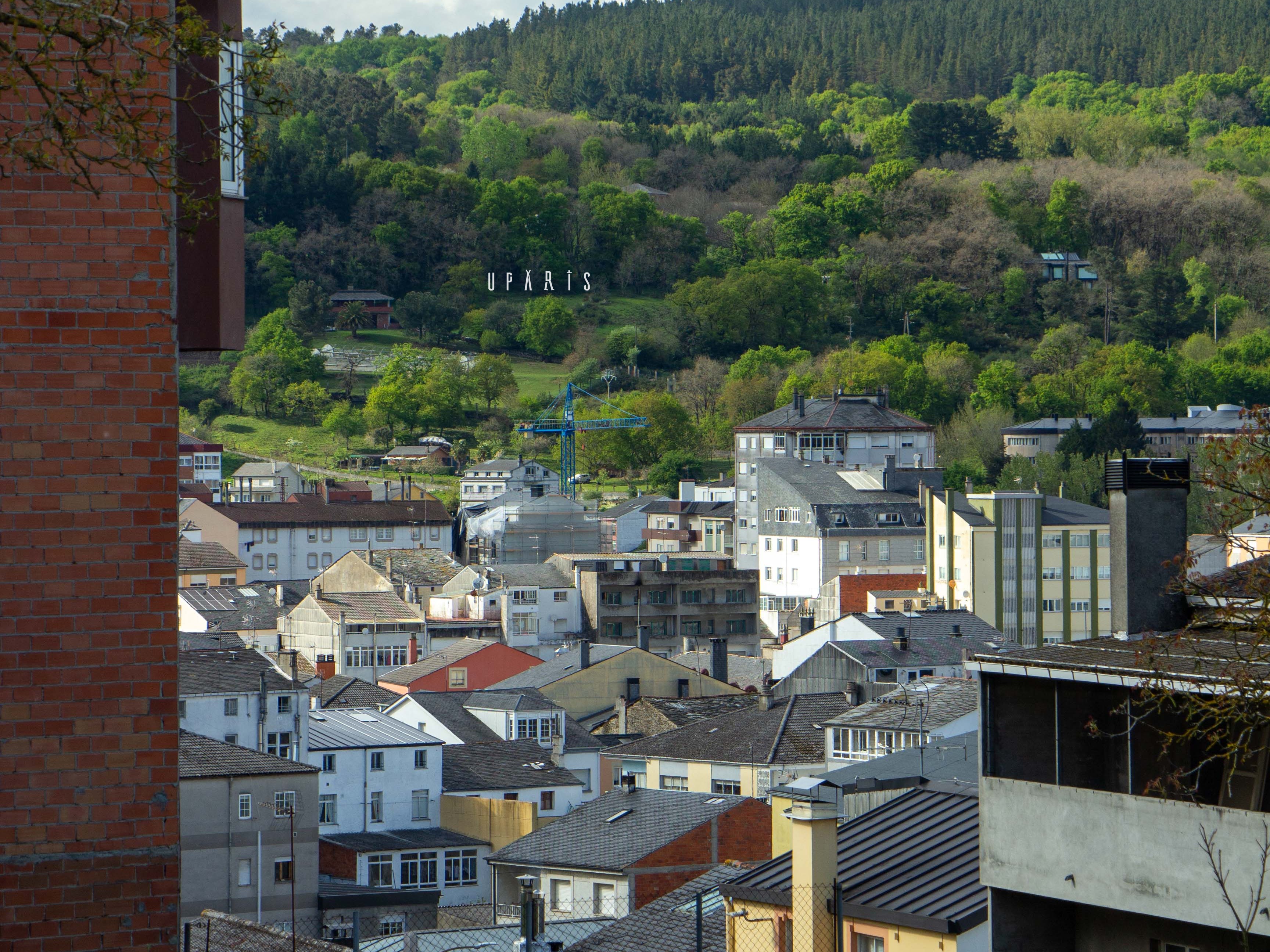
Make your own way to the accommodation in Sarria (RD. 118km ¹), where the group meets; this is the starting point of our walk on the Camino de Santiago in Spain.
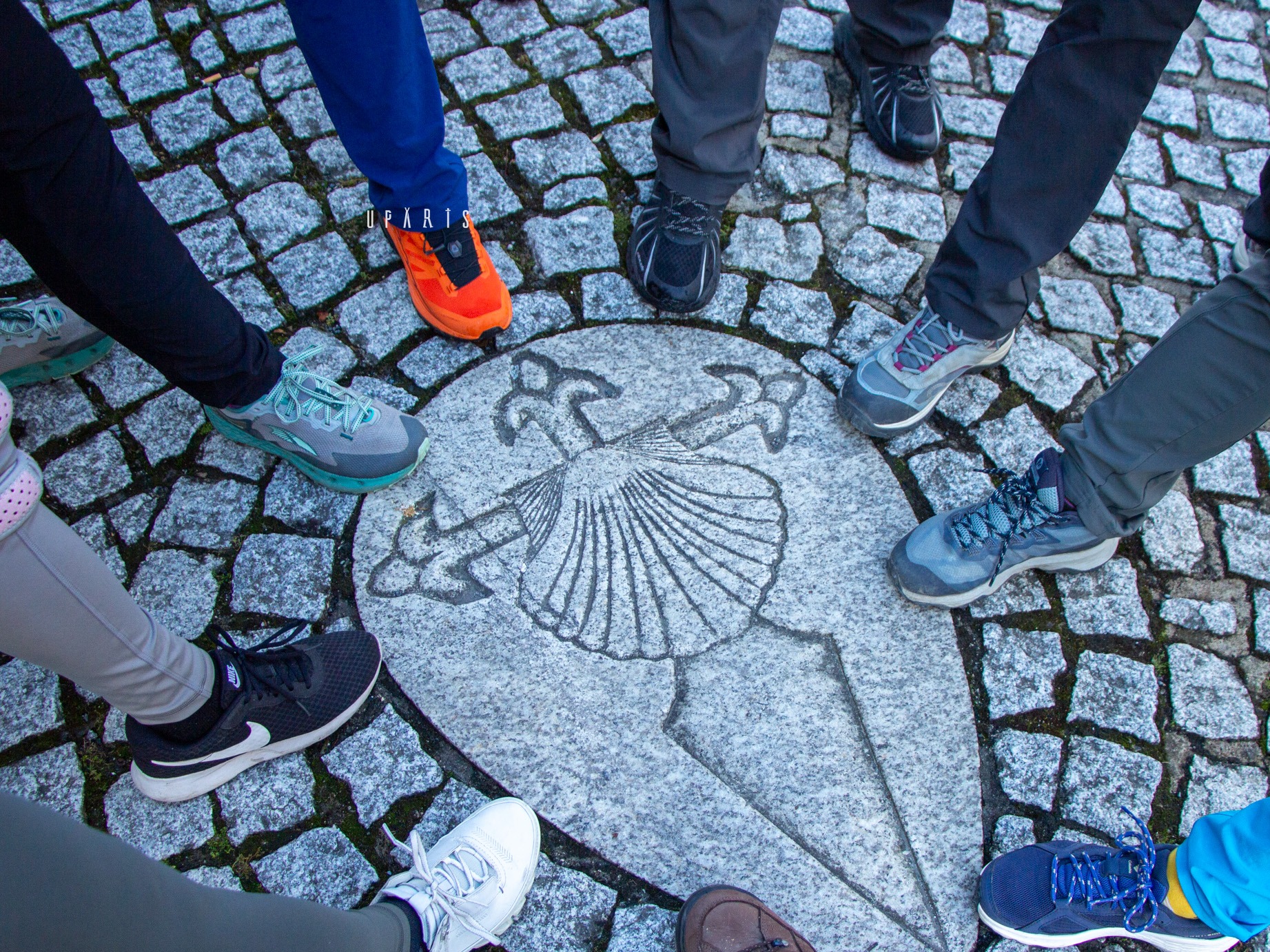
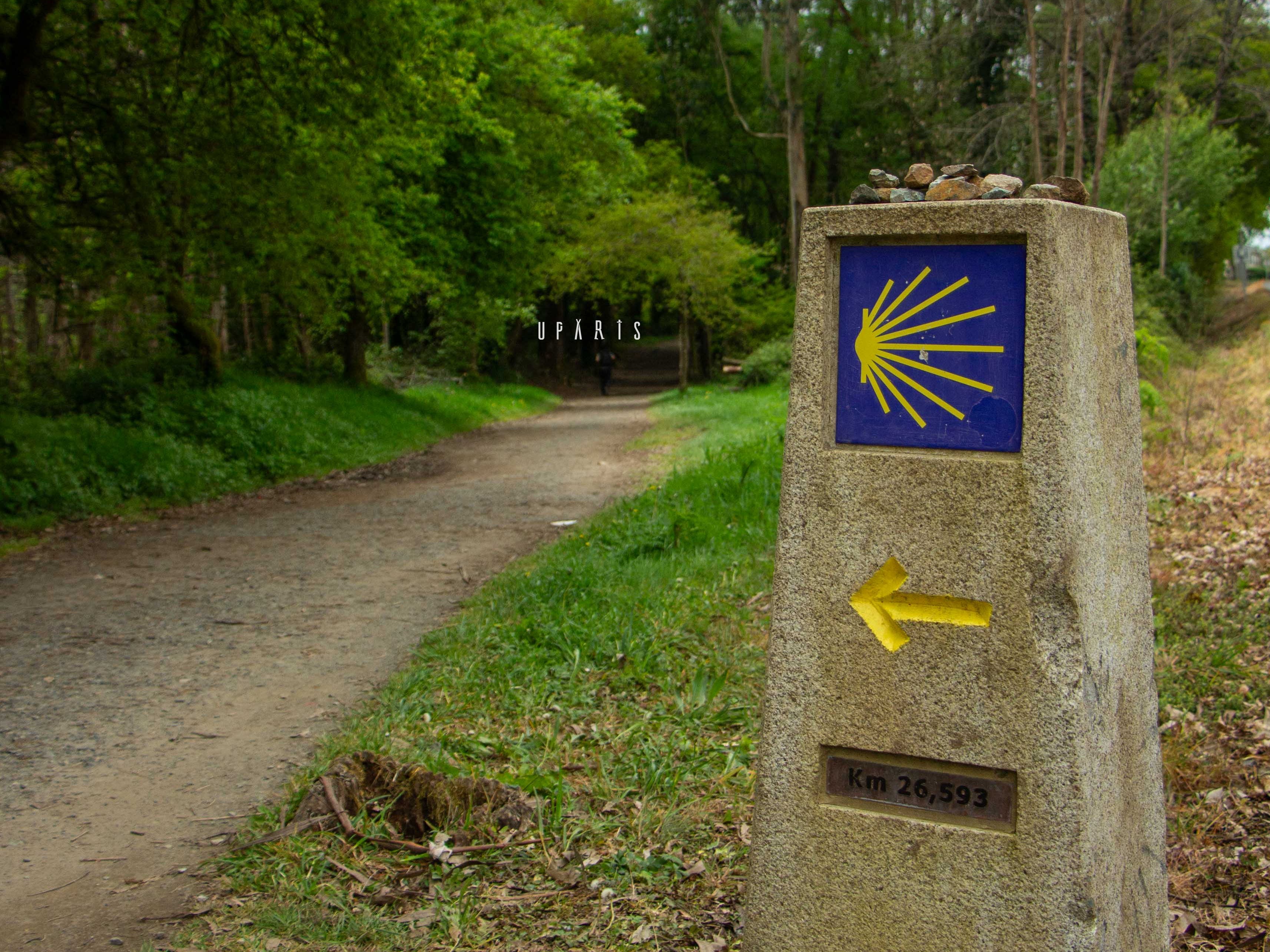
In this small town with its century of accumulated culture, along the quaint flagstone streets and past the Romanesque churches, the signs of the Camino (yellow arrows and scallop shells) are to be seen everywhere, showing one pilgrim after another the way.
After checking in to the hotel, you can sample authentic Galician food and local beer at a restaurant with local character, and get a feel for the warm and hospitable culture of Galicia. Well fed and watered, you can then get ready for the trek that is about to begin.
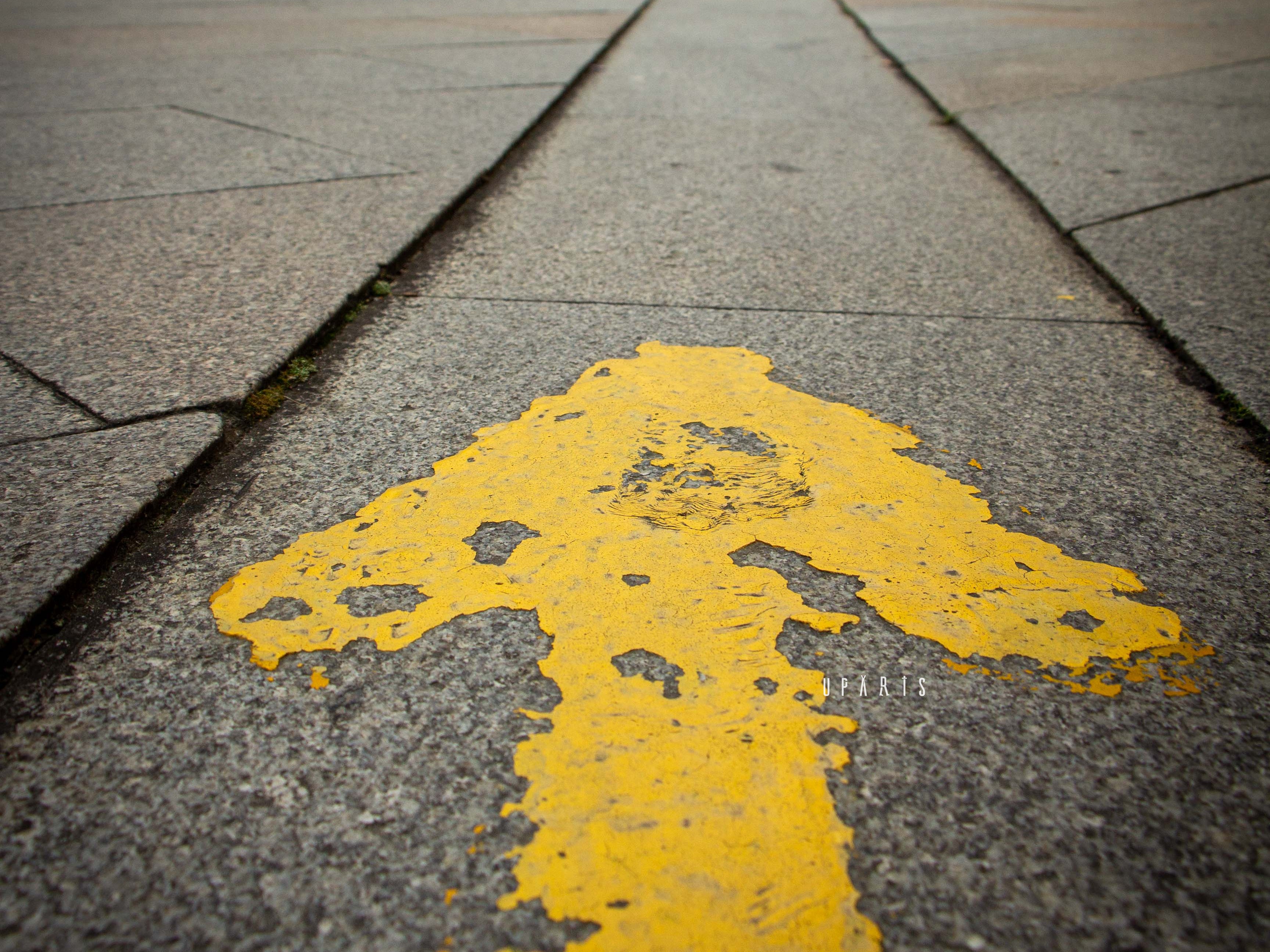
Sarria – Portomarín
In the early morning we set off from Sarria (RD. 118km), following the flagstone streets through the old town. The starting point is the old church of Santa Mariña (RD. 117km), whose bells echo through the streets and lanes and set a peaceful, devout tone for the journey. Climbing gently, we pass the Magdalena monastery (RD. 116km) and an old stone bridge; once out of town we enter the Galician countryside, where oak woods and pastures intertwine and stone walls run along the path.
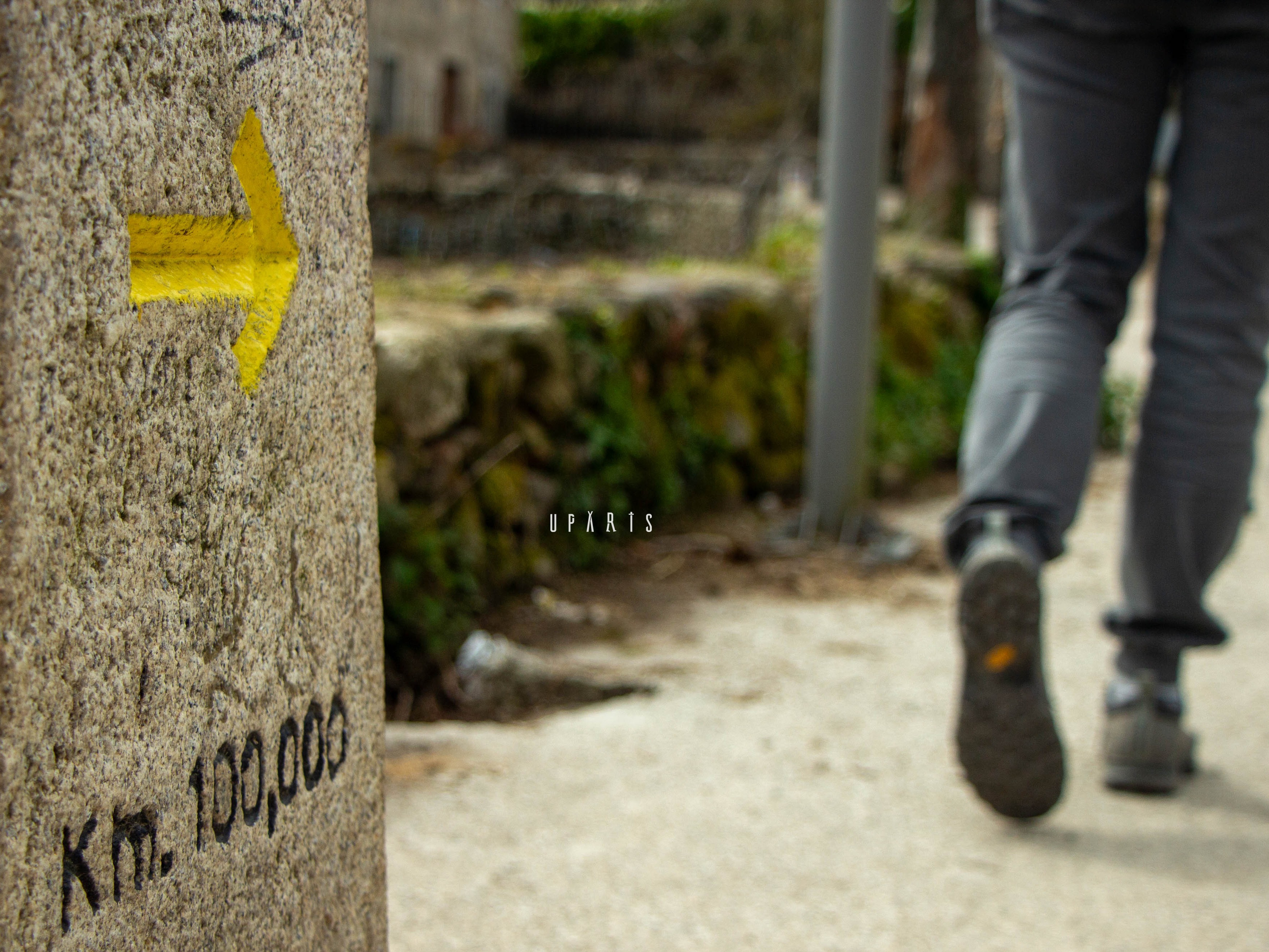
At Barbadelo (RD. 114km) you can visit the 12th-century church of Santiago (Iglesia de Santiago de Barbadelo), whose arched doorway is carved with shells and star motifs, a model of Galician Romanesque architecture. We continue through Peruscallo (RD. 110km) and Morgade (RD. 108.5km), guided along the way by pilgrim crosses and arrows carved in stone. On reaching Ferreiros (RD. 100km) we come to the famous "100-kilometre pilgrim marker stone"⁵, which symbolises truly joining the ranks of the pilgrims to the holy place.
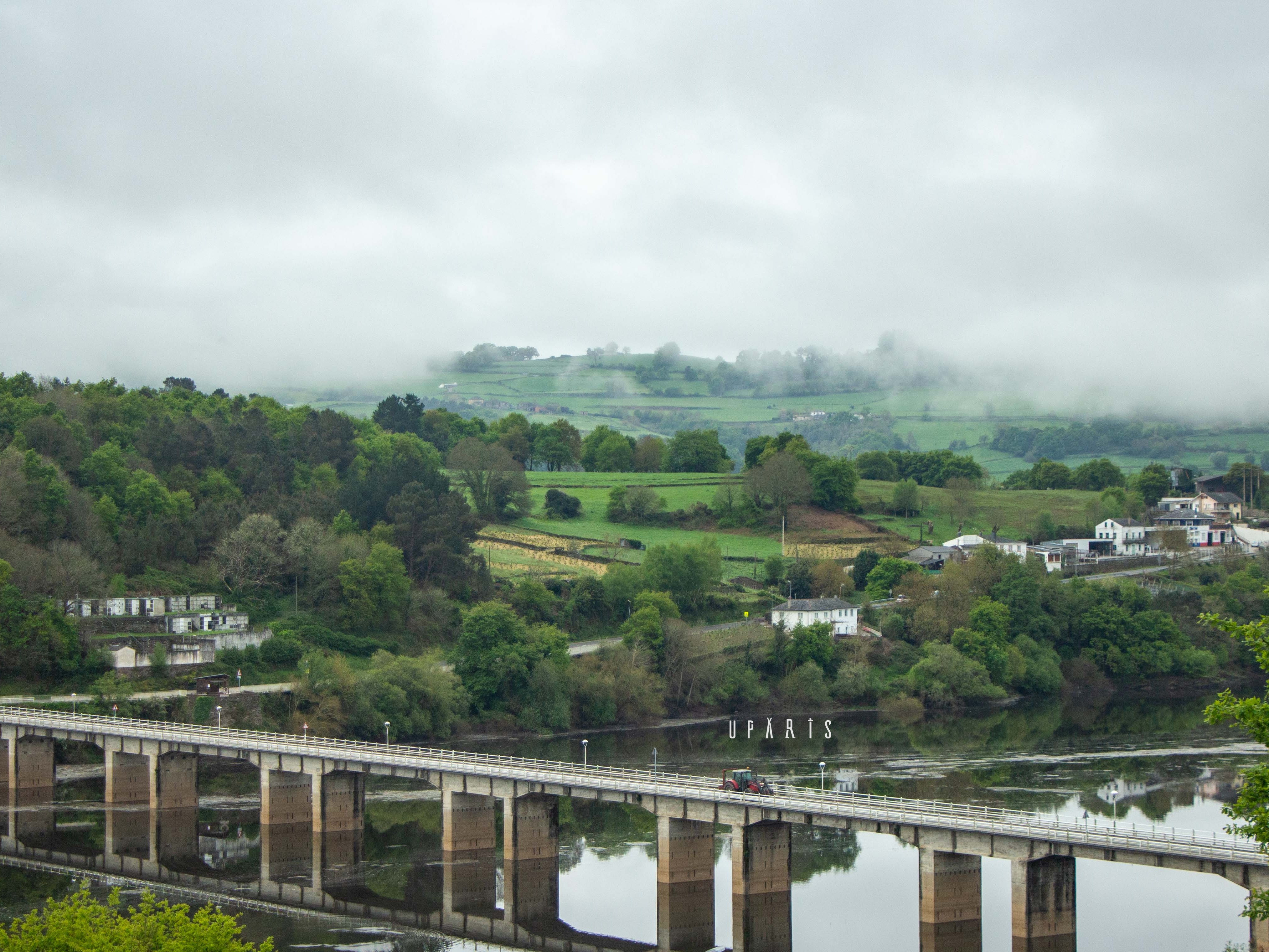
In the afternoon we climb gently along an undulating forest track, looking out over the valley of the Río Miño and the silvery shimmer of the reservoir. In the early evening we reach the Portomarín area (RD. 96km). Depending on the room bookings for each departure, that night's accommodation is arranged in the town of Portomarín or in Loio, a peaceful riverside village on its south side; when we stay in Loio, the next day we go from there by vehicle, five minutes to the town, to continue the walk.
Terrain: Country tarmac road + woodland path
Sarria – Portomarín
In the early morning we set off from Sarria (RD. 118km), following the flagstone streets through the old town. The starting point is the old church of Santa Mariña (RD. 117km), whose bells echo through the streets and lanes and set a peaceful, devout tone for the journey. Climbing gently, we pass the Magdalena monastery (RD. 116km) and an old stone bridge; once out of town we enter the Galician countryside, where oak woods and pastures intertwine and stone walls run along the path.
At Barbadelo (RD. 114km) you can visit the 12th-century church of Santiago (Iglesia de Santiago de Barbadelo), whose arched doorway is carved with shells and star motifs, a model of Galician Romanesque architecture. We continue through Peruscallo (RD. 110km) and Morgade (RD. 108.5km), guided along the way by pilgrim crosses and arrows carved in stone. On reaching Ferreiros (RD. 100km) we come to the famous "100-kilometre pilgrim marker stone"⁵, which symbolises truly joining the ranks of the pilgrims to the holy place.
In the afternoon we climb gently along an undulating forest track, looking out over the valley of the Río Miño and the silvery shimmer of the reservoir. In the early evening we reach the Portomarín area (RD. 96km). Depending on the room bookings for each departure, that night's accommodation is arranged in the town of Portomarín or in Loio, a peaceful riverside village on its south side; when we stay in Loio, the next day we go from there by vehicle, five minutes to the town, to continue the walk.
Portomarín – Palas de Rei
In the early morning we set off from Portomarín (RD. 96km), where the stone steps underfoot lead to the arcaded square and morning mist lies lightly over the valley of the Río Miño. Before leaving, you can take a group photo at the church of San Nicolás (RD. 95km) in the centre of town. Once moved and rebuilt brick by brick because of the reservoir project, it is a Romanesque fortress-church built between the 12th and 13th centuries by the Knights of St John of Jerusalem.
After leaving the town we climb gently through fields and forest, passing Gonzar (RD. 91km) and Castromaior (RD. 88km), where you can climb up to the ancient hill-fort site of Castro de Castromaior and look down on the old Celtic settlement and out to the distant mountains. We carry on via O Hospital (RD. 86km), Ligonde (RD. 81km) and A Eirexe (RD. 79km), the road winding between the hills of Galicia.
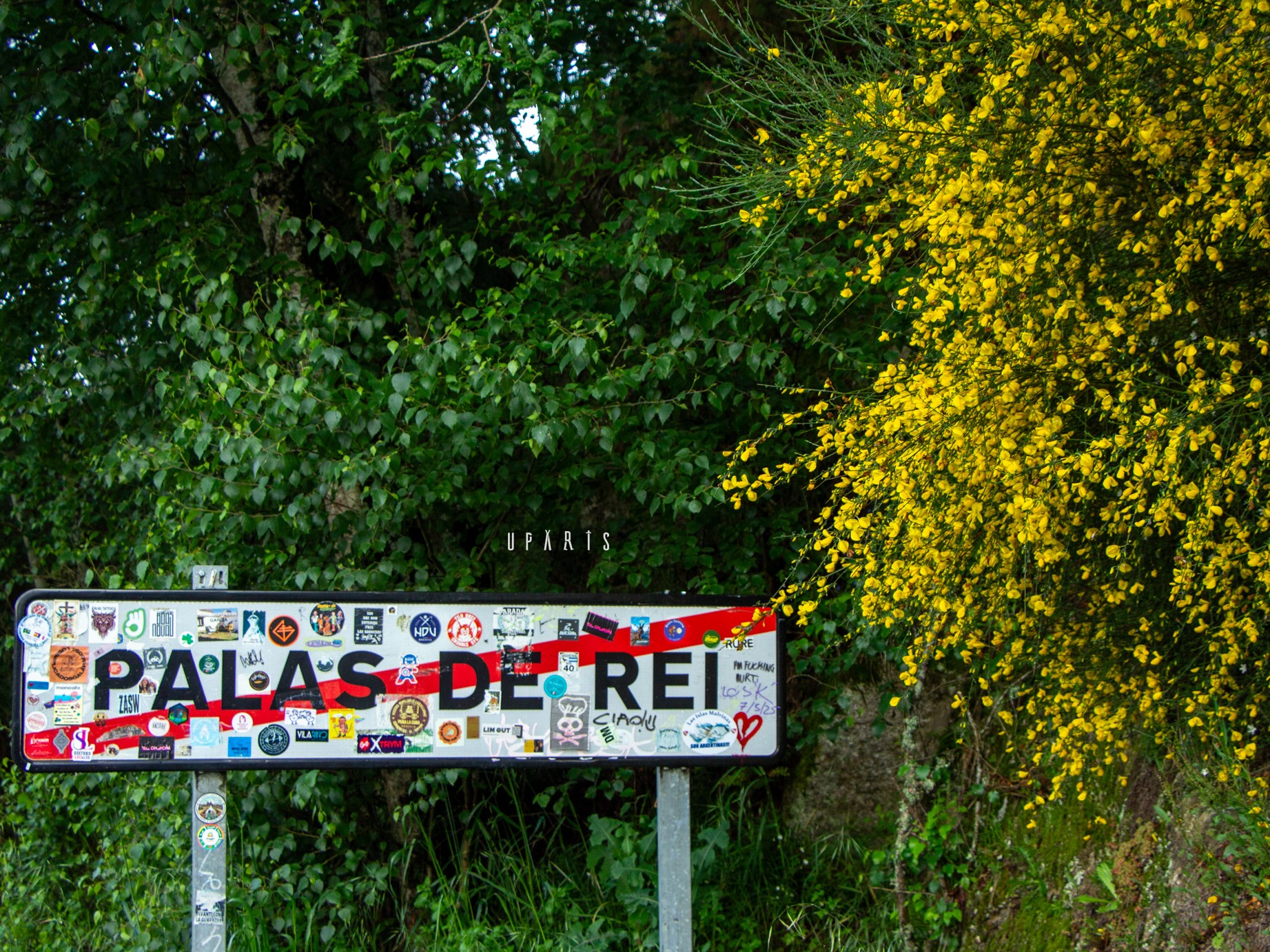
In the afternoon we reach Palas de Rei (RD. 69.5km), where you can visit the 12th-century church of San Tirso in the centre of town. Legend has it that a king of Galicia once prayed here, and that this is the origin of the name "Palace of the King".
Terrain: Tarmac road + country dirt track
Portomarín – Palas de Rei
In the early morning we set off from Portomarín (RD. 96km), where the stone steps underfoot lead to the arcaded square and morning mist lies lightly over the valley of the Río Miño. Before leaving, you can take a group photo at the church of San Nicolás (RD. 95km) in the centre of town. Once moved and rebuilt brick by brick because of the reservoir project, it is a Romanesque fortress-church built between the 12th and 13th centuries by the Knights of St John of Jerusalem.
After leaving the town we climb gently through fields and forest, passing Gonzar (RD. 91km) and Castromaior (RD. 88km), where you can climb up to the ancient hill-fort site of Castro de Castromaior and look down on the old Celtic settlement and out to the distant mountains. We carry on via O Hospital (RD. 86km), Ligonde (RD. 81km) and A Eirexe (RD. 79km), the road winding between the hills of Galicia.
In the afternoon we reach Palas de Rei (RD. 69.5km), where you can visit the 12th-century church of San Tirso in the centre of town. Legend has it that a king of Galicia once prayed here, and that this is the origin of the name "Palace of the King".
Palas de Rei – Arzúa
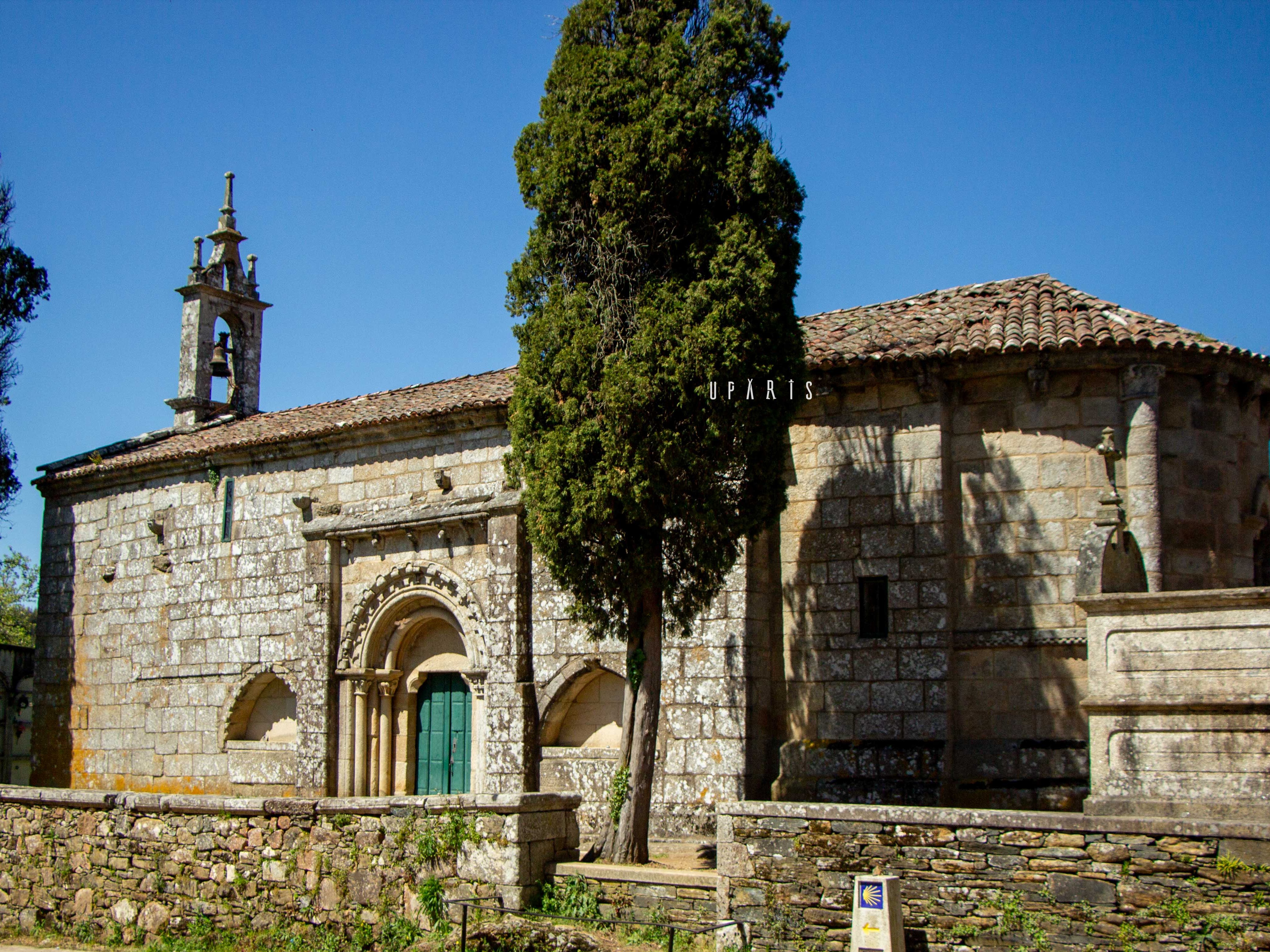
We set off from Palas de Rei (RD. 69.5km) with morning mist lying lightly over the rooftops of the town. The road runs through hills and farmland to Casanova (RD. 65km) and O Coto (RD. 64km), which marks our entry into the province of A Coruña. A woodland path leads to quiet O Leboreiro (RD. 60km), where the 13th-century church of Santa María (Iglesia de Santa María de Leboreiro) stands beside a stream, the relief on its lintel a symbol of protection and tenderness.
We continue to Furelos (RD. 57km) and cross the 12th-century Romanesque stone bridge (Puente Románico de Furelos), with a clear stream murmuring beneath it in the shade of green trees. At midday we reach Melide (RD. 56km) to taste an authentic octopus platter (Pulpo á Feira), sitting round a wooden table with other pilgrims and sharing a happy moment.
The afternoon's walk unfolds among rolling hills and eucalyptus woods, via Boente (RD. 51km) and Ribadiso (RD. 45km), where stream valleys and pastures weave a picturesque landscape. In the early evening we arrive in Arzúa (RD. 42km), where the faint aroma of this home of cheese welcomes travellers from afar.
Terrain: Tarmac road + forest track + stone bridge
Palas de Rei – Arzúa
We set off from Palas de Rei (RD. 69.5km) with morning mist lying lightly over the rooftops of the town. The road runs through hills and farmland to Casanova (RD. 65km) and O Coto (RD. 64km), which marks our entry into the province of A Coruña. A woodland path leads to quiet O Leboreiro (RD. 60km), where the 13th-century church of Santa María (Iglesia de Santa María de Leboreiro) stands beside a stream, the relief on its lintel a symbol of protection and tenderness.
We continue to Furelos (RD. 57km) and cross the 12th-century Romanesque stone bridge (Puente Románico de Furelos), with a clear stream murmuring beneath it in the shade of green trees. At midday we reach Melide (RD. 56km) to taste an authentic octopus platter (Pulpo á Feira), sitting round a wooden table with other pilgrims and sharing a happy moment.
The afternoon's walk unfolds among rolling hills and eucalyptus woods, via Boente (RD. 51km) and Ribadiso (RD. 45km), where stream valleys and pastures weave a picturesque landscape. In the early evening we arrive in Arzúa (RD. 42km), where the faint aroma of this home of cheese welcomes travellers from afar.
Arzúa – O Pedrouzo
In the early morning we leave Arzúa (RD. 42km), the air filled with the scent of eucalyptus and the smell of damp earth. The path runs between forest and pasture, passing in turn through Preguntoño (RD. 39km), A Peroxa (RD. 36km) and As Quintás (RD. 33km); stone walls and old wells dot the villages, showing the Galician countryside at its most authentic.
We walk on via A Boavista (RD. 31km) and A Salceda (RD. 29km), seeing on the way pilgrim memorials and crosses, reminders to cherish this peaceful stretch of the journey.
In the afternoon we pass through quiet A Rúa (RD. 26km), a village of white walls and red tiles among peaceful pastures. In the early evening we reach O Pedrouzo (RD. 21km), the last place to stock up before Santiago de Compostela, where travellers make ready on the eve of the finish.
Terrain: Forest trail + village roads
Arzúa – O Pedrouzo
In the early morning we leave Arzúa (RD. 42km), the air filled with the scent of eucalyptus and the smell of damp earth. The path runs between forest and pasture, passing in turn through Preguntoño (RD. 39km), A Peroxa (RD. 36km) and As Quintás (RD. 33km); stone walls and old wells dot the villages, showing the Galician countryside at its most authentic.
We walk on via A Boavista (RD. 31km) and A Salceda (RD. 29km), seeing on the way pilgrim memorials and crosses, reminders to cherish this peaceful stretch of the journey.
In the afternoon we pass through quiet A Rúa (RD. 26km), a village of white walls and red tiles among peaceful pastures. In the early evening we reach O Pedrouzo (RD. 21km), the last place to stock up before Santiago de Compostela, where travellers make ready on the eve of the finish.
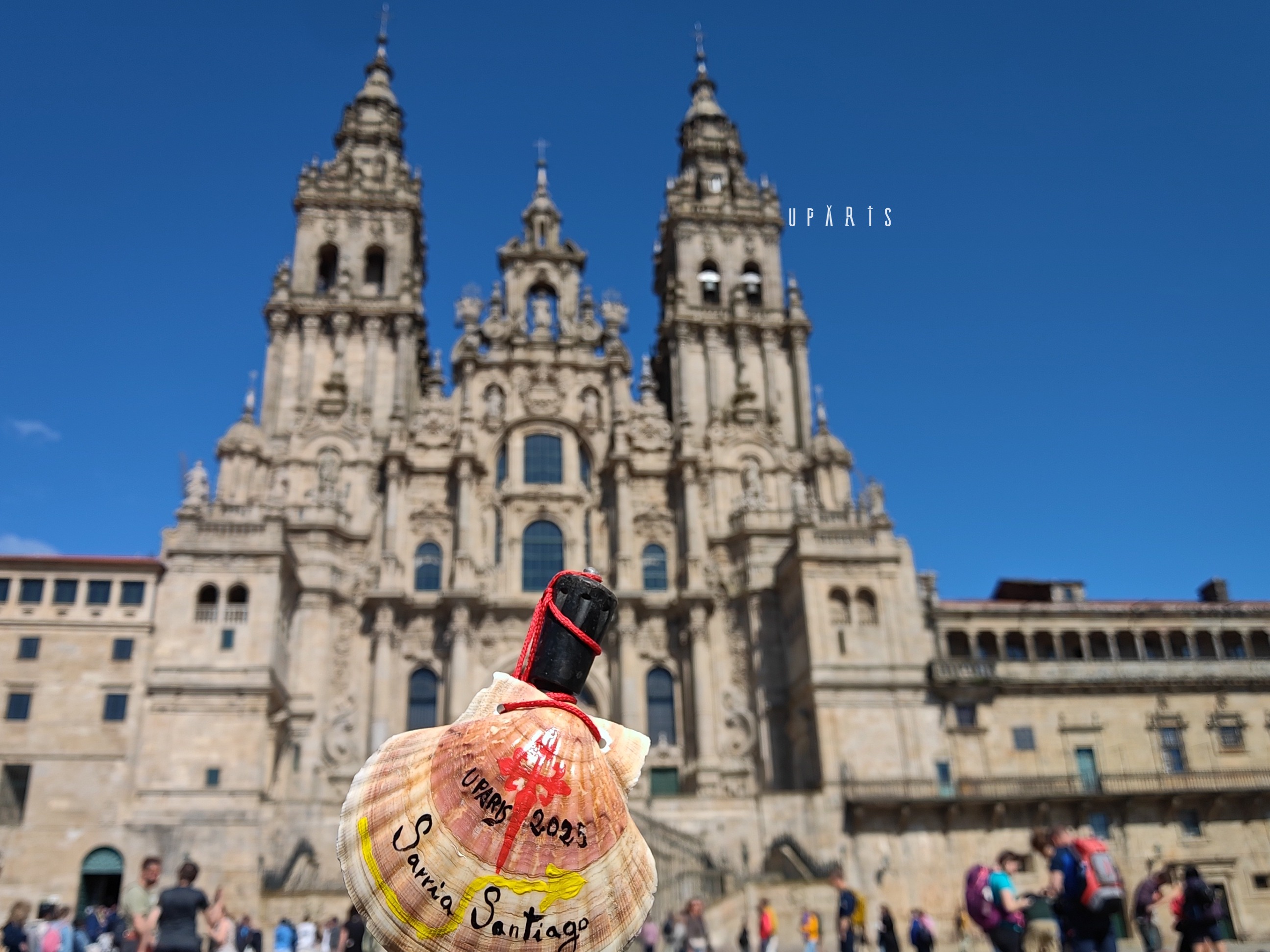
O Pedrouzo – Santiago de Compostela
We set off from O Pedrouzo (RD. 21km) along soft dirt tracks through the eucalyptus woods, in the cool air. The road rises gently to O Amenal (RD. 18km) and then reaches A Lavacolla (RD. 11km). Here a stream murmurs; since ancient times this has been the place where pilgrims washed themselves, symbolising the pure state of mind in which, the dust washed away, they prepared to greet the holy city.
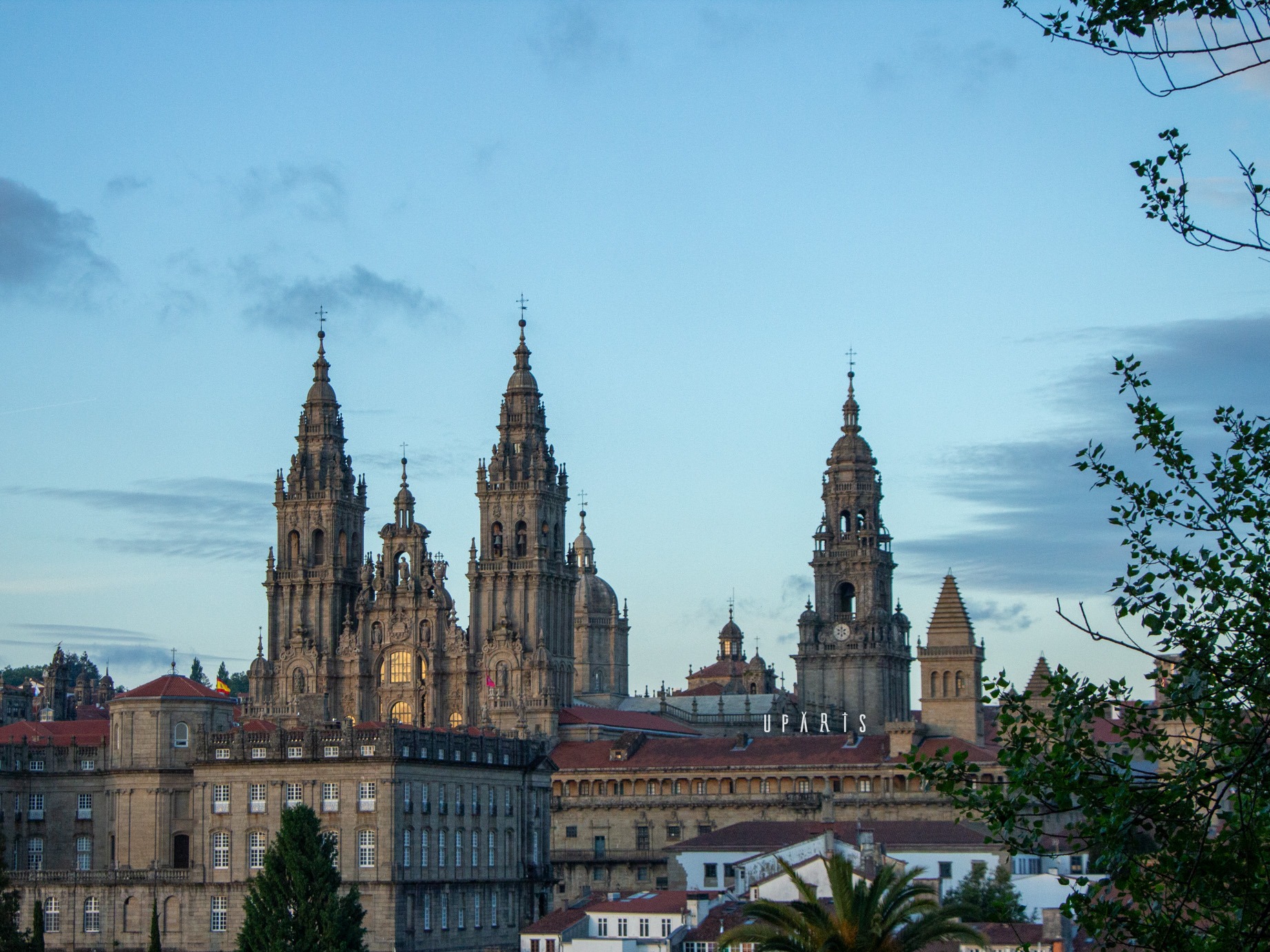
Continuing uphill, we climb to Monte do Gozo (RD. 5km). On the summit the chapel of San Marcos and the pilgrim monument (Monumento al Peregrino) stand in the wind; this is where travellers first see, far off, the spires of Santiago de Compostela Cathedral. Joy, tears and faith mingle here.
Through the San Lázaro district (RD. 3km) and along Rúa de San Pedro (RD. 1km) we walk slowly into the old town, the flagstones ringing underfoot. Passing through the "Pilgrims' Gate" (Porta do Camiño), we step into Praza do Obradoiro, where Santiago de Compostela Cathedral (RD. 0km) towers in the sunlight. The walk is complete.
We go to the Pilgrim's Office (Oficina del Peregrino) to hand in the pilgrim passport (Credencial del Peregrino), now full of stamps, and receive the pilgrim certificate in Latin (Compostela) bearing our own name. At this moment, all the perseverance turns into gratitude and peace.
Terrain: Woodland trail + city streets
O Pedrouzo – Santiago de Compostela
We set off from O Pedrouzo (RD. 21km) along soft dirt tracks through the eucalyptus woods, in the cool air. The road rises gently to O Amenal (RD. 18km) and then reaches A Lavacolla (RD. 11km). Here a stream murmurs; since ancient times this has been the place where pilgrims washed themselves, symbolising the pure state of mind in which, the dust washed away, they prepared to greet the holy city.
Continuing uphill, we climb to Monte do Gozo (RD. 5km). On the summit the chapel of San Marcos and the pilgrim monument (Monumento al Peregrino) stand in the wind; this is where travellers first see, far off, the spires of Santiago de Compostela Cathedral. Joy, tears and faith mingle here.
Through the San Lázaro district (RD. 3km) and along Rúa de San Pedro (RD. 1km) we walk slowly into the old town, the flagstones ringing underfoot. Passing through the "Pilgrims' Gate" (Porta do Camiño), we step into Praza do Obradoiro, where Santiago de Compostela Cathedral (RD. 0km) towers in the sunlight. The walk is complete.
We go to the Pilgrim's Office (Oficina del Peregrino) to hand in the pilgrim passport (Credencial del Peregrino), now full of stamps, and receive the pilgrim certificate in Latin (Compostela) bearing our own name. At this moment, all the perseverance turns into gratitude and peace.
Departure from Santiago de Compostela
After breakfast the group disperses and everyone is free to go, according to their onward plans.
If you have plenty of time, you can make your own way to Fisterra (0km) and explore the place known as "the end of the world". It is not only a superb spot for admiring the beauty of the Atlantic; it also has the "0 kilometre" marker stone, which symbolises the landmark end point of the Camino.
Frequently asked questions
Are there any restrictions on signing up?
Age requirement: 15 to 70
- Applicants over 60 must confirm that they are in good physical condition;
- Minors under 18 must travel accompanied by a legal or authorised guardian and may not sign up on their own.
Information required: when signing up, please be sure to provide accurate and complete personal details (name, sex, date of birth, contact details, etc.).
Health requirements: participants should be in good physical condition and able to cope with the physical effort of several consecutive days of hiking. We advise against signing up in the following cases, including but not limited to: serious cardiovascular or cerebrovascular disease, pulmonary oedema, epilepsy, severe depression, recovery from major surgery, pregnancy, reduced mobility, or any other case in which a doctor advises against long-distance hiking.
This is a fixed-group trekking product. To protect the experience and safety of your fellow participants, please tell us of your own accord, and truthfully, about your state of health before departure. Please conceal nothing; if an accident results from doing so, the responsibility is your own.
If incorrect information supplied by you causes a booking error or disrupts the trip, the responsibility is your own.
The travel agency is entitled, on the basis of its assessment of an applicant's health and of safety considerations, to recommend adjustments or to refuse participation.
Which country's visa do I need?
Customers holding a passport or valid residence permit of a European Union country or territory, a United States, Canadian, Singaporean or Malaysian passport, or Hong Kong, Macao and Taiwan (China) passports may enter Spain without a visa: you only need to buy a flight to Madrid, Spain, to begin your trek on the Camino de Santiago.
For customers who need to apply for a Schengen visa (for example, holders of a mainland China passport), we strongly recommend applying for the Schengen visa as early as possible (the application can be submitted at the earliest 6 months before the start of the trip) and obtaining a valid Schengen visa more than 60 days before the start of the trip; we particularly recommend applying for a Spanish Schengen visa, to ensure smooth entry.
Once you have signed up and paid in full online, the organiser will provide customers who need to apply for a Schengen visa with an English-language letter of invitation and itinerary for this trip, to help the visa application go more smoothly.
What kind of insurance do I need?
We sell no insurance and the trip price includes none.
Each traveller must take out their own travel insurance covering the whole trip and meeting at least the minimum legal or regulatory requirements of the destination. For example, for a traveller who needs a Schengen visa: travel medical insurance of at least €30,000, valid throughout the Schengen area, covering repatriation for medical reasons, urgent medical care, emergency hospital treatment and death.
We also recommend cover suited to mountain activities (search and rescue, including helicopter rescue), as well as cancellation, assistance and personal liability insurance.
If you rely on the insurance that comes with your bank card, check with your bank or its insurer that the cover meets these minimum requirements, and note the emergency number.
Please give your insurer, policy number and emergency number in the pre-departure questionnaire, so the guide can help you reach them if needed.
See Article 15 of the General Terms and Conditions of Sale.
What about lunch and dinner?
The Camino is well provided with facilities along the way, which makes the journey all the more convenient.
Lunch can be eaten in at a pilgrim restaurant with fine views along the trail, or you can buy sandwiches at a bakery for a picnic; lunch generally costs €10–20 per person per day.
For dinner, you are free to sample the local specialities at your accommodation or at a restaurant with local character nearby; dinner generally costs €20–30 per person per day.
This flexible and varied approach to meals not only frees you from the fixed set menus of the traditional tour group, but also lets you choose freely according to your own taste and budget: you eat with more freedom, the costs are more transparent, and you enjoy the distinctive experience of local specialities as well.
How does the luggage transfer for the duffel bag work?
The trip comes with a dedicated luggage transfer service for your duffel bag, which is carried by the logistics vehicle stage by stage: hand over your duffel bag early in the morning and collect it in the afternoon at that day's accommodation; the duffel bag is carried all the way to the accommodation where the trek ends. On the trail you only need to carry essentials such as water, and can walk at ease.
You must pack all your belongings into two bags: a small rucksack to carry with you and a duffel bag for the luggage transfer (either a duffel bag or a suitcase will do).
- Rucksack: a hiking rucksack of about 30 litres, convenient for carrying your personal items during the day's walk.
- Duffel bag for the luggage transfer (either a duffel bag or a suitcase will do): everything else goes in here; it is carried by a dedicated vehicle to each night's accommodation, so that you can get at it after each day's walk.
Special note on the duffel bag: the duffel bag must weigh no more than 15 kilograms; if the bag does not comply with the rules, the driver will refuse to carry it, and the customer bears the consequences.
What gear do I need to prepare?
- Rucksack: choose a 30-litre hiking rucksack with a built-in rain cover.
- Clothing: waterproof hardshell jacket, technical T-shirts, waterproof trousers, fleece / light down jacket, convertible hiking trousers, sports underwear, hiking socks, sunglasses and a sun hat / warm hat, etc.
- Footwear: a pair of well-fitting hiking boots, plus blister plasters and foot balm, to prevent the foot problems that can arise on long walks.
- Trekking poles: they help you keep your balance and take pressure off the knees.
- Toiletries: quick-dry towel, toothbrush / toothpaste (hotels do not provide toiletries), lip balm, sun cream, after-sun cream / face mask, etc.
- Personal first-aid kit: the medication you need every day, painkillers, anti-inflammatories, stomach medicine, plasters, blister plasters, elastic bandage, insect repellent spray, etc.
- Other essentials: EU travel adapter and extension lead, rain poncho, earplugs, hydration bladder, dry bag, head torch, euros in cash, etc.
Specific advice on buying gear and other such information will be shared in the group chat after you sign up.
How are the photos taken during the trip used?
On some trips the trip leader or the UPARIS team may take photos or videos. When a photographer comes along, we share a selection with the participants free of charge after the trip, through a download link or a private album, for their personal use (terms of sale 17.2).
We use photos or videos in which you can be recognised for promotion (website, social media, brochures…) only with your prior consent: you may tick the box for it when you book, or leave it unticked — refusing has no effect on your trip (terms of sale 17.3).
You can withdraw your consent at any time from your account or by writing to contact@uparis.org, and ask us to delete the content concerning you (terms of sale 17.5).
What safety rules should I follow on the trek?
To ensure safety and a smooth trip, please observe the following principles:
- Follow the tour leader's instructions: while hiking, please strictly follow the tour leader's arrangements, including the gear to carry, the walking pace and changes of route. The tour leader will set the pace according to the group's fitness and teach hiking techniques, helping everyone to move forward safely and efficiently.
- Itinerary changes and safety decisions: in bad weather (heavy rain, thick fog, thunderstorms) or if the group is moving more slowly than expected, the tour leader will alter the route or shorten the itinerary according to the actual situation, to make sure the group reaches its accommodation safely. If an individual member seriously affects the group's progress because of fitness or health problems, the tour leader has the right to require that member to drop out of part of the itinerary for the time being and to be transferred by vehicle; the related additional costs are borne by the member personally.
- Team spirit and respect: the Camino is a shared journey of mind and body. Please treat one another with respect, understanding and tolerance, support each other and keep up a good atmosphere in the team. The tour leader's job is to ensure safety and coordination, not to act as a private attendant.
- Physical and mental preparation: before departure, please assess your own state of health, do some suitable endurance training and get used in advance to hiking with a rucksack and walking on slopes.
Weather Forecast
Price details
Price includes:
- 5 nights in a double room in star-rated hotels or guesthouses
- 1 night in a double room in a boutique guesthouse
- Breakfast × 6 days
- 1 foreign mountain leader
- Camino de Santiago passport and scallop shell
- Luggage transfer for the duffel bag throughout the trek (limited to 1 duffel bag of up to 15kg per person; if the duffel bag is overweight, the driver will refuse to carry it, and the customer bears the consequences)
Price does not include:
- D1 each participant's transport before the group meets at the accommodation
- D7 each participant's transport after the group disperses from the accommodation
- Each participant's Schengen visa application fees
- Each participant's hiking gear
- Each participant's travel insurance
- Each participant's fee for obtaining the official pilgrim certificate in Latin (paid by the participant when collecting the certificate at the Pilgrim's Office)
- Lunches and dinners during the trip
- Transfer by vehicle to that night's accommodation, needed if a participant gives up the day's walk part-way for personal reasons (optional, at your own expense, about €30 per person per leg; sections travelled by vehicle do not count towards the distance walked, and this may affect your receiving the pilgrim certificate)
- Tip for the guide (not compulsory; suggested amount €30 per person for the whole trip)
- Any other item not stated as included
- Accommodation is in double rooms throughout. For guests who sign up alone, we will do our best to arrange a room share for you with a fellow participant of the same sex; if no room share can be arranged, a single supplement must be paid (€400 per person for the whole trip).
- Additional costs caused by force majeure (such as natural disasters, epidemics, war, strikes, visa delay, flight delay or cancellation, etc.)
- Chinese interpreting (not included in this trip)
Booking conditions
Cancellation conditions
Fees kept if the client cancels, by the date of the request (current schedule, Terms of sale, art. 10):
- 76 days or more before departure: Full refund
- 41 to 75 days before departure: 70% cancellation fee
- 40 days or less before departure: No refund
If you cancel, invitation letter fees (30€ per letter issued) are not refunded; they are refunded if we cancel the trip or if you terminate the contract under Article 10.7 of the terms of sale because of exceptional and unavoidable circumstances.
Exceptional and unavoidable circumstances must meet all three of the following conditions: (1) they occur in the trip's activity area or its immediate vicinity; (2) they significantly affect the performance of the trip or transport to that area; (3) they are beyond the control of the party invoking them and could not have been avoided even if all reasonable measures had been taken. Reasons personal to the customer (such as health, visa, personal flights or changes of schedule) are not such circumstances.
Terms of saleStandard information form (package travel)
The legal form about your rights for package travel, to read before booking.
Standard information form (package travel)General information
Before you sign up
Minimum group size: 6 people. Maximum per departure: 10 people.