
Tour du Mont Blanc: Essential
Tour du Mont Blanc: Essential
Price to be announced
International flights not included
Have a question about this trip?
Price to be announced
What awaits you
Tour du Mont Blanc (TMB)
The Tour du Mont Blanc (TMB for short) is unanimously regarded by keen hikers as a world-class hiking route to take on at least once in a lifetime, on which you walk across the borders of three countries, France, Switzerland and Italy, and soak up the rich atmosphere of modern mountain culture's birthplace.
In full, the Tour du Mont Blanc is 170 kilometres long and can be walked in either of two directions, clockwise or anticlockwise, with 5–8 hours of walking a day at altitudes between 1,000 and 2,500 metres; the whole circuit takes about 10–12 days.
We have carefully planned an anticlockwise hiking route with 6 hiking days, selecting the most scenic sections: over the Bonhomme and the Col de la Seigne into Italy, across the Col du Grand Ferret into Switzerland, back into France by the Col de Balme, and a grand finale at Lac Blanc. The monotonous stretches along the road are covered by private transfers, keeping your energy for the passes and balcony paths that truly deserve it.
Our itinerary specially includes the three must-walk passes of the Tour du Mont Blanc (TMB):
The Col de la Seigne (alt. 2516m) links France and Italy and is the best place from which to view the south side of Mont Blanc, a point where history and nature meet.
The Col du Grand Ferret (alt. 2537m) sits on the border between Italy and Switzerland. Reach the top, and the grandeur of the glaciers and the panorama of the Alps lie spread out before you.
The Col de Balme (alt. 2191m) lies on the border between Switzerland and France, with Swiss refinement on one side and French romance on the other, so that you enjoy to the full the mingling of the two countries' characters.
Even without walking the whole of the TMB, you can still cross on foot, with a full sense of occasion, the boundary stones of three countries, France, Switzerland and Italy, feast your eyes on the magnificent scenery of the Alps and experience in depth the unique charm of this enchanting range.
Our design
Mountains by day, town lights by night
For those of you who love the mountains, look for variety in the way you travel and also care about the value of the experience, we have created a Tour du Mont Blanc that is more "to your taste": for 2027 the Essential edition has been fully upgraded to an anticlockwise route with 6 hotel nights + 1 night in a mountain hut, including 3 dinners; moving freely between the vastness of nature and the human bustle of the towns; and, at a price that offers excellent value for money, gaining a more varied and richer experience.
The beauty of good sleep | Hotel × Recovery
6 nights in hotel double rooms, where a good night's sleep restores the body and every detail is attentively looked after; plus one night in a mountain hut in Vallorcine, sharing the warmth and liveliness of a 4-bed room with your companions. Sleep better, walk more steadily.
Two settings | Nature × Culture
By day you breathe between glaciers and meadows and hear the cowbells and the wind; in the evening you return to a small town to taste cheese, wine and local flavours, and stroll through the streets after dinner; the return to nature and the embrace of culture both happen on one and the same journey.
Our idea of value | Less but Better
No piling things up, no rushing from one place to the next: time is kept for the scenery and the encounters that are truly worth lingering over. At a price that offers excellent value for money, the experience is made "broad": comfortable nights, meals you can count on, a deeper look.
This is the Essential edition: walk the trail in depth and keep the programme light; between the mountains and the town lights, find a rhythm of your own.
Challenge yourself, scenery at its finest
This classic, world-class trek is a pilgrimage on foot to the roof of Western Europe, Mont Blanc (alt. 4808m).
With a highest point of about 2,500 metres on the hiking sections and a relatively low risk of altitude sickness, you walk across the borders of France, Switzerland and Italy, visiting glaciers thousands of years old, alpine pastures and valley villages ringed by snowy peaks, immersed in the purest and most breathtaking natural scenery of the Alps.
Most people need only 2–3 months of physical preparation to set out boldly on this legendary route. Complete this trek and it will be one of the journeys of your life, filled with a sense of achievement.
The Aiguille du Midi, Chamonix's unmissable sight
On the first day of the Essential edition, after check-in, the time is yours: we recommend riding the cable car, at your own expense, to visit the classic landmark of Chamonix (alt. 1035m), the Aiguille du Midi (alt. 3842m); the Aiguille du Midi cable car ticket is not included in the trip price.
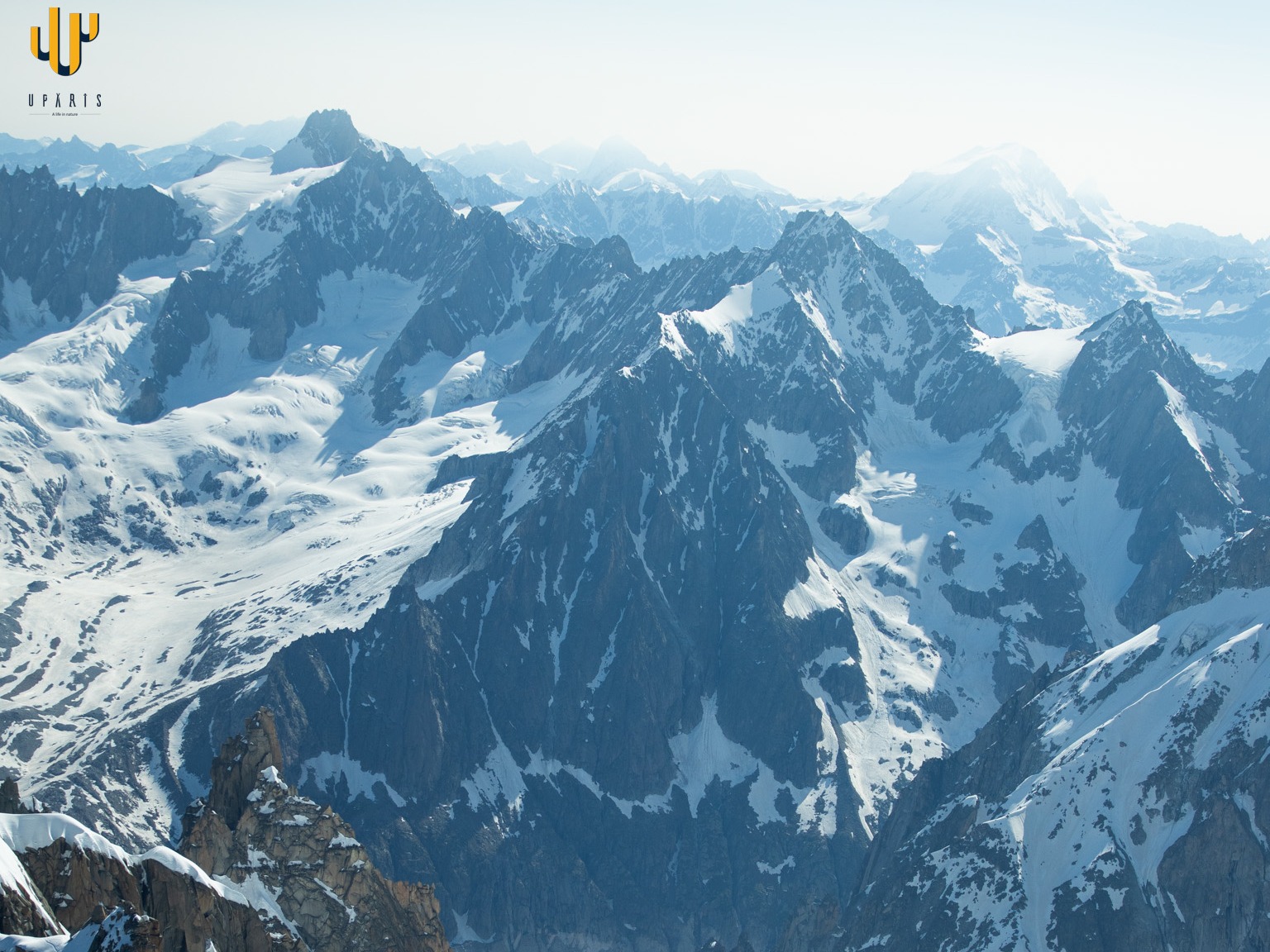
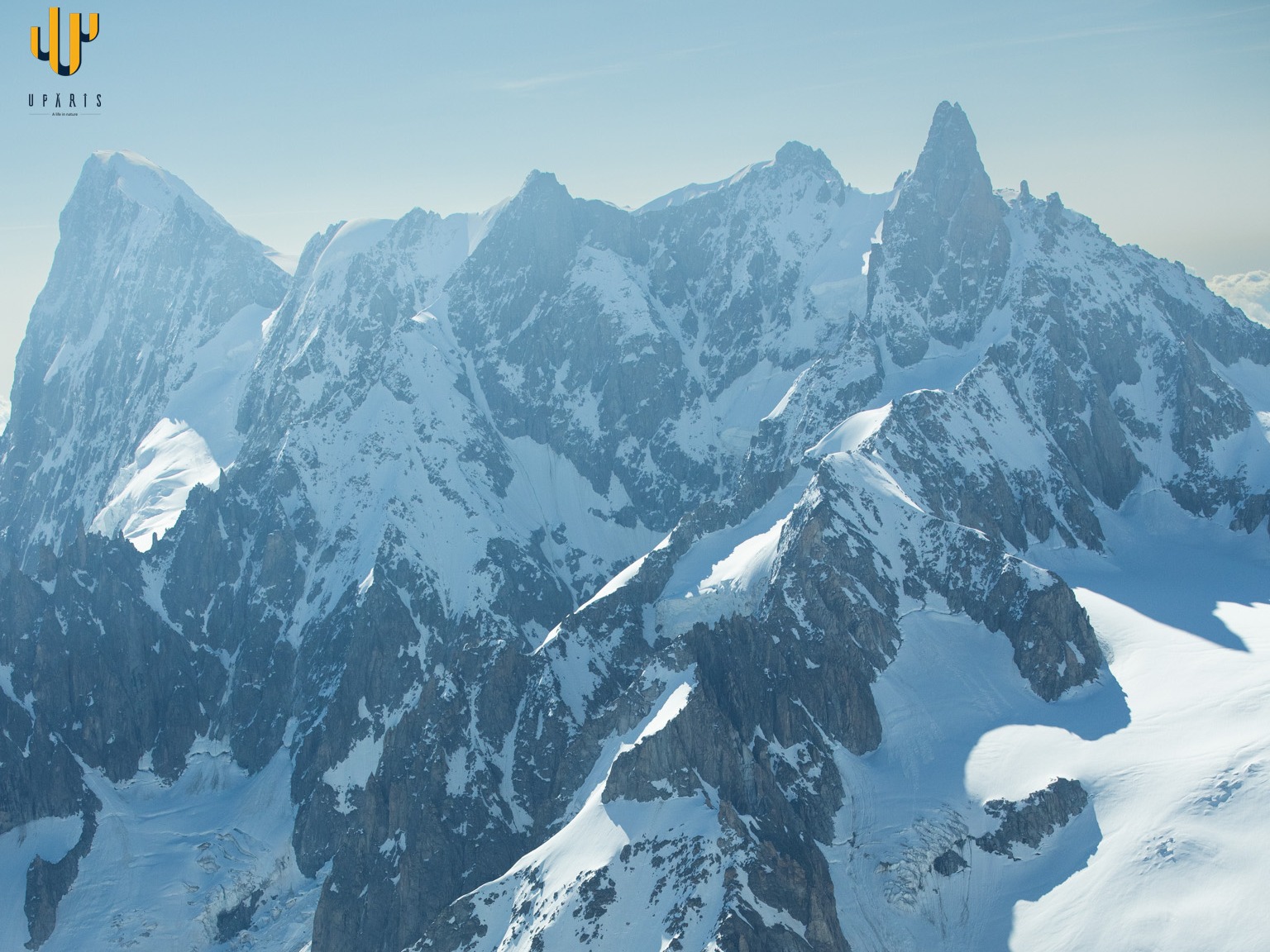
The Aiguille du Midi is only 8 kilometres from Mont Blanc, the roof of Western Europe, and is a superb place from which to admire the magnificent scenery of the Alps. Standing on the summit at 3,842 metres, you take in range upon range of snowy peaks, deep glaciers and endless high-mountain scenery: a breathtaking sight.
Riding the world-famous high-mountain cable car, you reach the top of the Aiguille du Midi with ease. The 360° viewing platform puts the splendour of Mont Blanc and the Alpine peaks within arm's reach. Looking for a thrill? Step onto the glass viewing platform "Step into the Void" (Pas dans le Vide), with a thousand-metre abyss beneath your feet and snowy peaks and glaciers all around: a unique sensation, awe-inspiring and heart-racing.
Comfortable accommodation, hiking with a light pack
Tread glaciers and cross passes by day, and return to a small-town hotel in the evening: a hot shower and a soft bed are the best reward for a day's walking.
The trip is arranged as 6 nights in hotel double rooms + 1 night in a 4-bed room in a mountain hut, and includes 3 dinners (D2, D5, D6):
6 nights in hotel double rooms: 1 night at each end in Les Houches (3-star) + 1 night in the Bourg-Saint-Maurice area (3-star) + 2 consecutive nights in Courmayeur (4-star) + 1 night in the small Swiss town of Orsières (2-star);
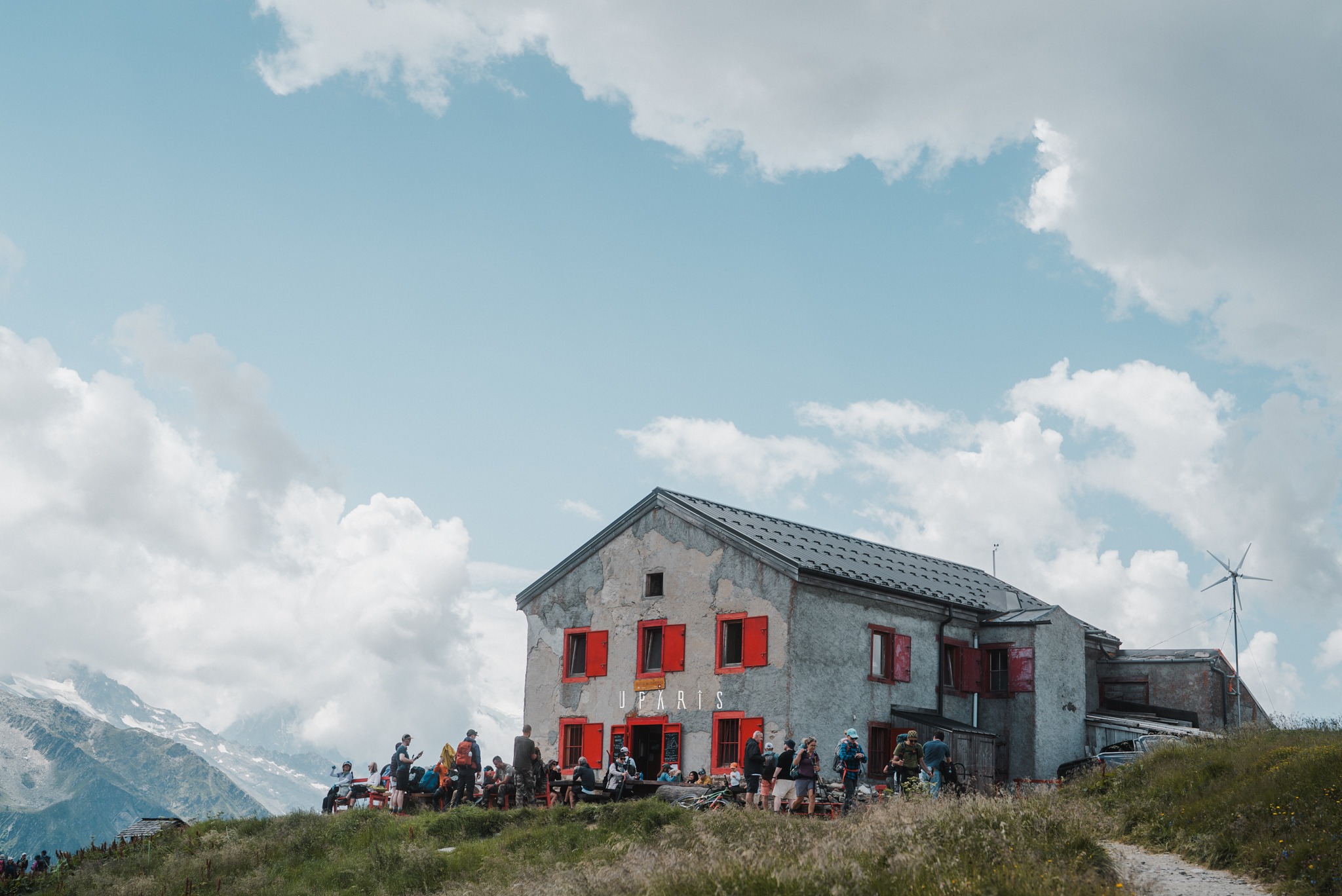
1 night in a 4-bed room in a mountain hut in Vallorcine: at Le Buet, at the foot of the descent from the Col de Balme, with an individual bed for everyone, the room shared with members of your own group.
The other dinners are at your own expense: Courmayeur and the towns of the Chamonix Valley are full of restaurants where you can sample local flavours as you please.
Luggage transfer for your duffel bag is provided throughout: you carry only what the day requires, give your energy to the trail and keep your mind free for the scenery.
Hiking with a light pack
All you have to do is set off light, carrying the essentials for the day's walk, and enjoy in-depth trekking and its pleasures to the full.
A professional local team, quality service
Carefully put together by a local Chinese-French team with more than ten years' experience of organising the Tour du Mont Blanc.
Before you set off, our Chinese-speaking customer service team will give you the most accurate and comprehensive up-to-date information on trekking around Mont Blanc, so that your adventure runs smoothly.
Our French guides are highly experienced and have for many years specialised in leading Chinese hikers around Mont Blanc. They have a thorough knowledge of the natural environment, climate, geography, vegetation and wildlife of the Alps, and will lead you to a deep appreciation of the unique beauty of these mountains.
During the trek, your guide will show you how to use your hiking gear correctly and how to pace your breathing, and after the walk will share effective stretching methods to help prevent injury, so that your trek is safe, comfortable and enjoyable.
Travel with like-minded, high-calibre companions
We keep away from the conventional mass tourism model and refuse whistle-stop sightseeing, where you sleep on the coach and get off to take photos. We firmly believe that the journey is a meeting of minds, a profound experience.
On this eight-day trek, companions from all corners of the world gather at the foot of Mont Blanc to set out together on mountain paths that no high heels could ever reach, to breathe a fresh air hard to find in the city, and to bask in the breeze that moves freely through nature.
As you walk through the vast mountain landscape and talk from the heart under the stars at night, every step writes a precious memory.
Good to know
Chamonix
Set where France, Italy and Switzerland meet, it is a renowned ski resort in winter and a gathering place for mountaineers in summer. For two and a half centuries Chamonix has done its utmost to welcome adventurers from all over the world, and has become a true paradise for outdoor sports enthusiasts.
Mont Blanc
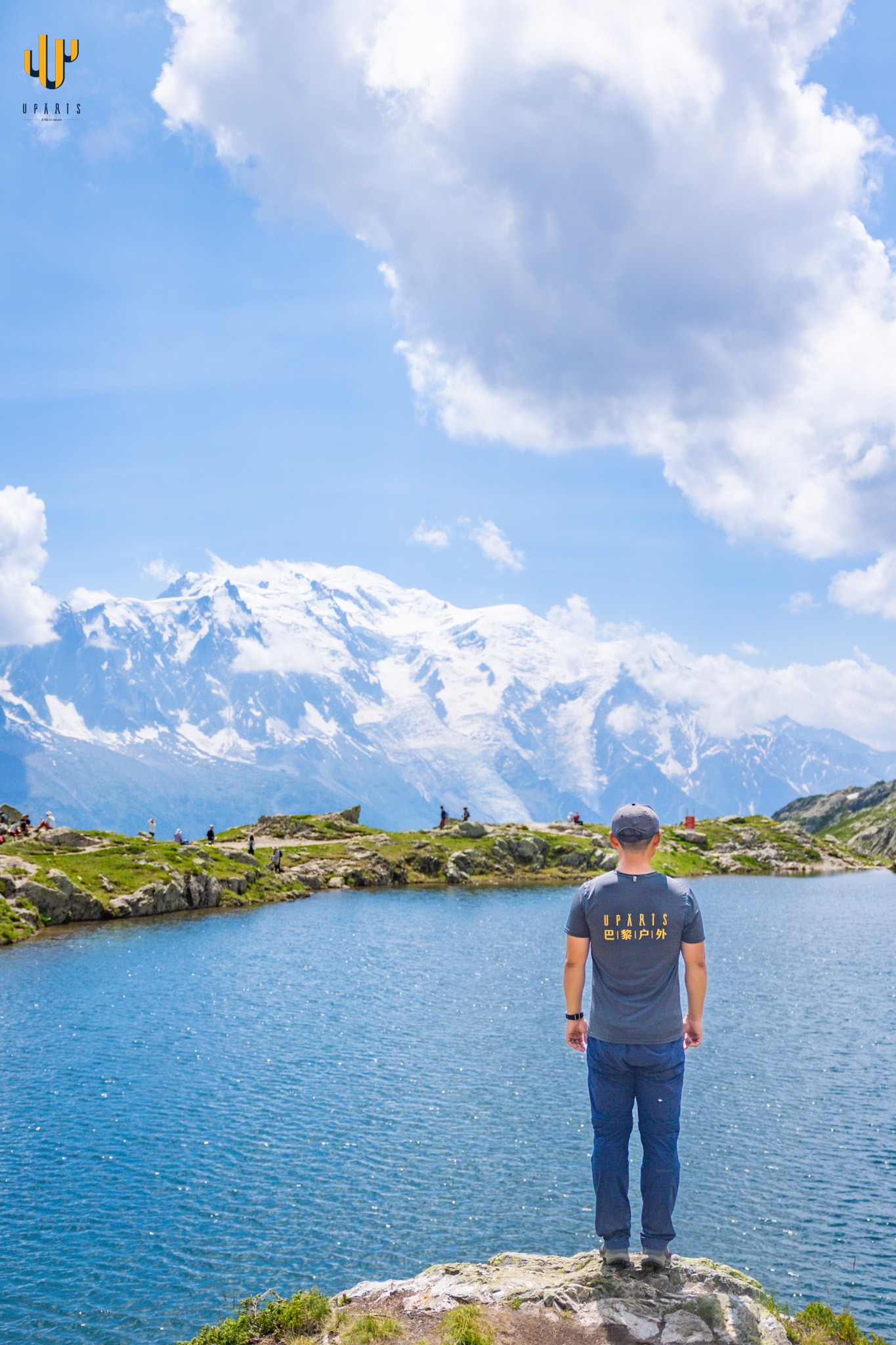
Mont Blanc, whose French name translates literally as "white peak", is the principal summit of the Alps and the highest peak in Western Europe, at 4,808 m.
388 of them from UPARIS's official RedNote account See the post ›
蓝色海洋
October 7, 2026
Automatically translated from Chinese
The tour leader was attentive and responsible, the accommodation and meals were great, thanks to UPARIS for the thoughtful arrangements
山野来客
October 3, 2026
Automatically translated from Chinese
The itinerary was very well organized
Terence
October 3, 2026
Automatically translated from Chinese
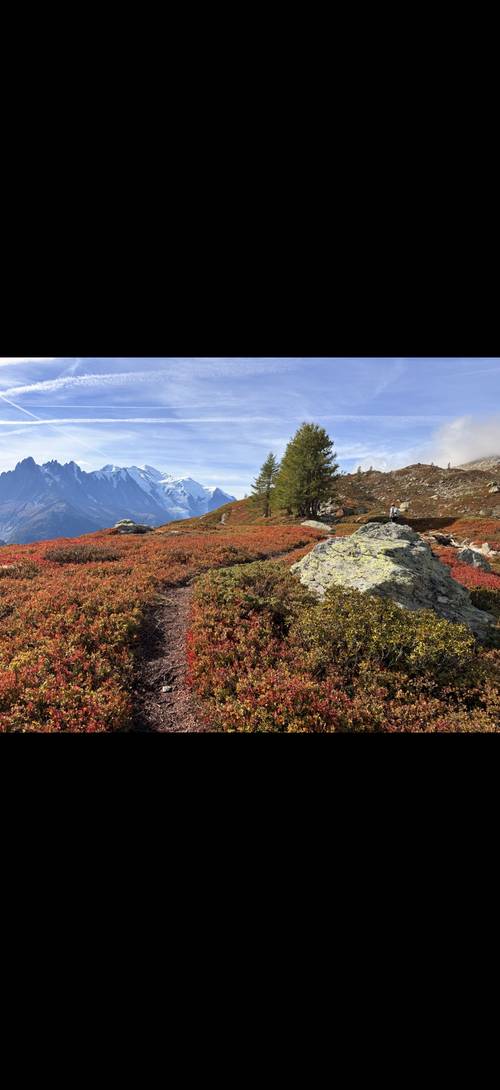
From the planning to the trip itself, everything was handled with great care. Both customer service and our tour leader did their very best to solve any problem we had, giving us a trip that was close to perfect. The hiking is moderately challenging and takes some endurance, but the views along the way are endless and there's plenty of laughter — every step was worth it!
山野来客
October 3, 2026
Automatically translated from Chinese
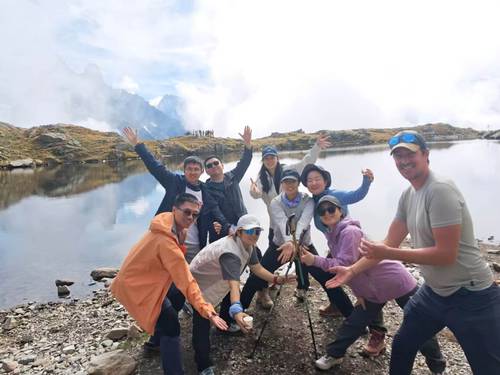
The guide was conscientious, caring and truly outstanding, the accommodation was well arranged and everything flowed seamlessly. A really worthwhile hiking trip. I hope you'll develop more routes in the future.
Nora
September 28, 2026
Automatically translated from Chinese
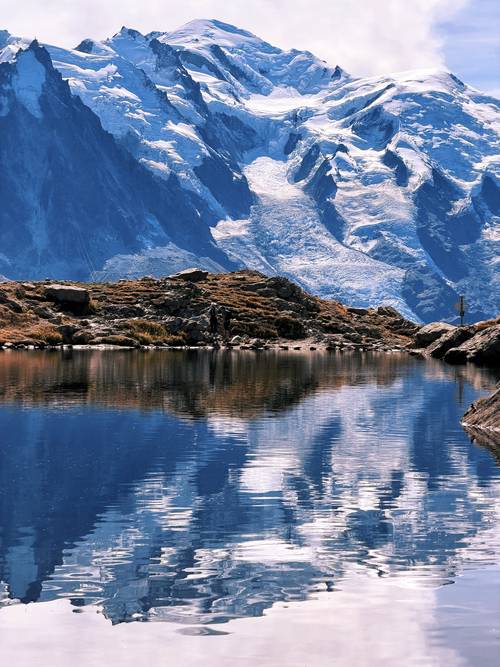
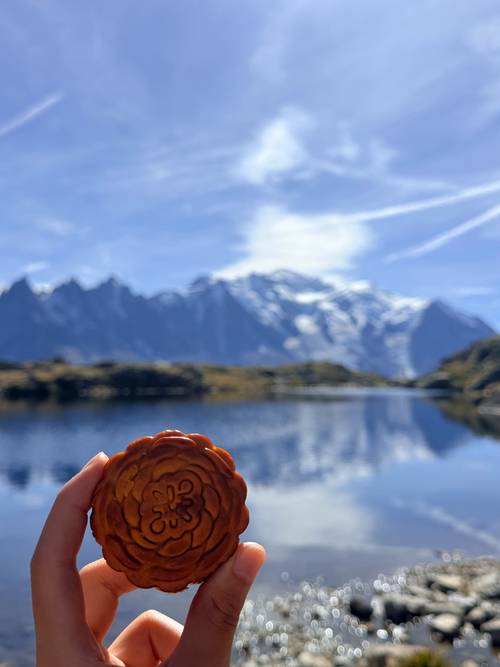
A great experience. Our leader Luis was very professional, set the perfect hiking pace and looked after everyone in the group; it turned out much easier than I expected. It happened to be the Mid-Autumn Festival, and the staff thoughtfully prepared mooncakes for us. Early autumn in the Alps is stunning: good weather all week and few people around. The only pity is that we didn't get to see Lac Blanc.
山野来客
September 28, 2026
Automatically translated from Chinese
Well planned, a really great experience👌🏻
Cheryl
September 28, 2026
Automatically translated from Chinese
Our guide Luis was very professional and caring, the hotels throughout the trip were all great, and it was a fantastic experience. The difficulty is moderate and suits most people: you get the scenery of the best sections, plus climbs and descents that are both fun and challenging. I'll be recommending it to my friends ((*^∀^))👍
AliceJ
September 27, 2026
Automatically translated from Chinese
The tour leader was very professional, patient and funny. Great choice of hotels, especially in Chamonix and Courmayeur, where they were really conveniently located and pretty decent too. The small group was just the right size, not too big and not too small, and well organized. The itinerary was well planned.
Sylvia
September 15, 2026
Automatically translated from Chinese
Before: so worried! After: so happy! The stunning scenery all along the way, the thorough organisation, the friendly teammates, and our witty guide Julien with his bottomless knowledge all made this trip so wonderful!
蓝色海洋
October 7, 2026
Automatically translated from Chinese
The tour leader was attentive and responsible, the accommodation and meals were great, thanks to UPARIS for the thoughtful arrangements
山野来客
October 3, 2026
Automatically translated from Chinese
The itinerary was very well organized
Terence
October 3, 2026
Automatically translated from Chinese
From the planning to the trip itself, everything was handled with great care. Both customer service and our tour leader did their very best to solve any problem we had, giving us a trip that was close to perfect. The hiking is moderately challenging and takes some endurance, but the views along the way are endless and there's plenty of laughter — every step was worth it!
山野来客
October 3, 2026
Automatically translated from Chinese
The guide was conscientious, caring and truly outstanding, the accommodation was well arranged and everything flowed seamlessly. A really worthwhile hiking trip. I hope you'll develop more routes in the future.
Nora
September 28, 2026
Automatically translated from Chinese
A great experience. Our leader Luis was very professional, set the perfect hiking pace and looked after everyone in the group; it turned out much easier than I expected. It happened to be the Mid-Autumn Festival, and the staff thoughtfully prepared mooncakes for us. Early autumn in the Alps is stunning: good weather all week and few people around. The only pity is that we didn't get to see Lac Blanc.
山野来客
September 28, 2026
Automatically translated from Chinese
Well planned, a really great experience👌🏻
Cheryl
September 28, 2026
Automatically translated from Chinese
Our guide Luis was very professional and caring, the hotels throughout the trip were all great, and it was a fantastic experience. The difficulty is moderate and suits most people: you get the scenery of the best sections, plus climbs and descents that are both fun and challenging. I'll be recommending it to my friends ((*^∀^))👍
AliceJ
September 27, 2026
Automatically translated from Chinese
The tour leader was very professional, patient and funny. Great choice of hotels, especially in Chamonix and Courmayeur, where they were really conveniently located and pretty decent too. The small group was just the right size, not too big and not too small, and well organized. The itinerary was well planned.
Sylvia
September 15, 2026
Automatically translated from Chinese
Before: so worried! After: so happy! The stunning scenery all along the way, the thorough organisation, the friendly teammates, and our witty guide Julien with his bottomless knowledge all made this trip so wonderful!
No account needed. Thank you for your review: every piece of feedback helps us keep improving our routes and your experience.
Route map
The whole loop at a glance
- Days8 days · 6 hiking stages
- Distanceabout 80 km
- Highest point2,537 m
- CountriesFrance · Italy · Switzerland
Professional guiding
Luggage transfer
Mountain lodging
Day by day programme
Discover each stage of your adventure
Meeting in Les Houches
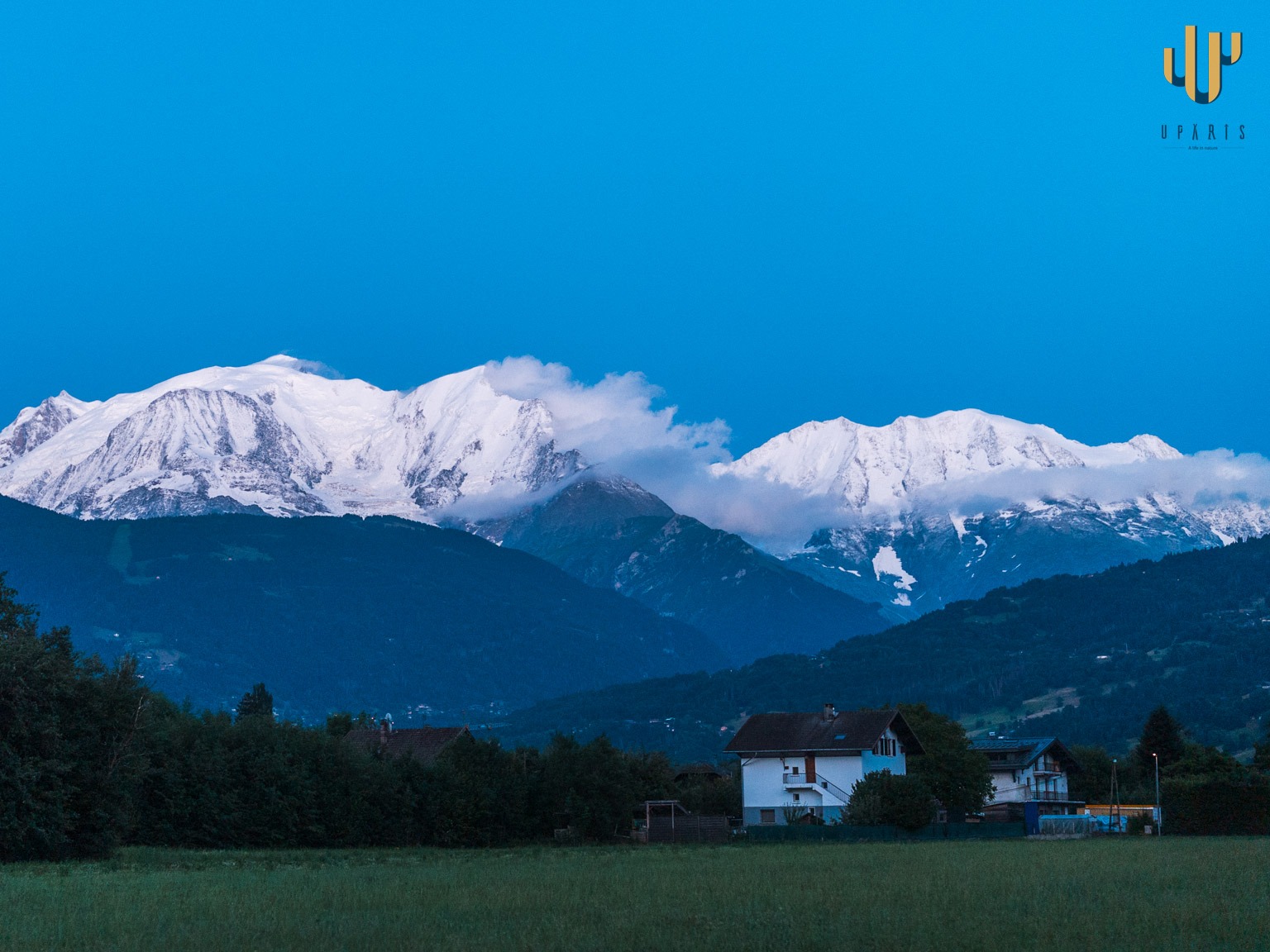
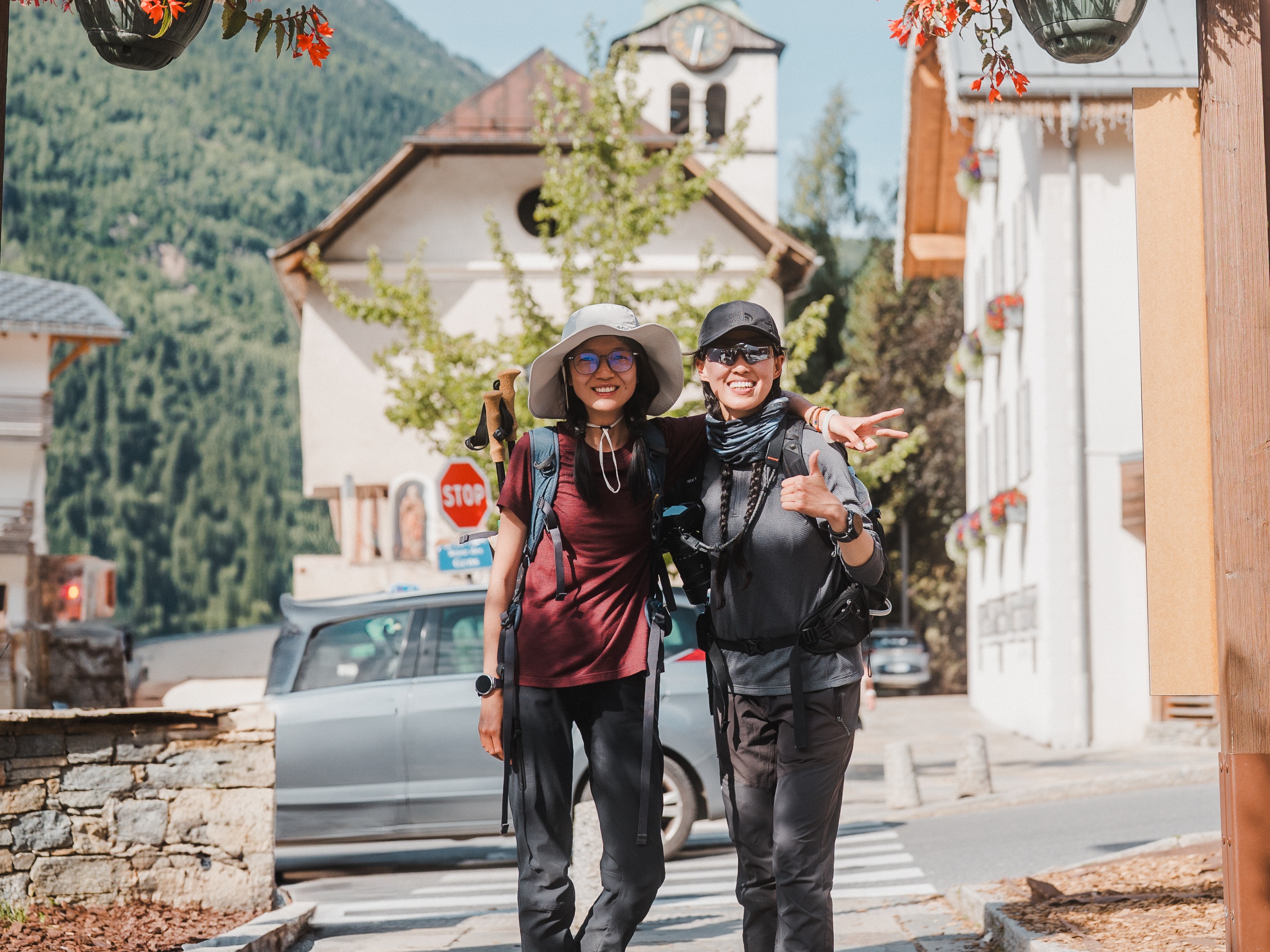
Today, please make your own way to Les Houches (alt. 1011m) in the Chamonix Valley, where the group meets, and check in at the hotel. It is about a 10-minute drive from the centre of Chamonix (alt. 1035m); Chamonix is hailed as the "birthplace of modern mountain sports", and by successfully hosting the first Winter Olympic Games in 1924 it also wrote a bold chapter in sporting history.
On arrival, first leave your luggage at the hotel; the rest of the day is free: you can stroll round the town of Chamonix, home to a great many outdoor shops, from good-value Decathlon to top brands such as Arc'teryx, Norrøna, Mammut and Millet, the ideal place to top up and upgrade your gear; or, at your own expense, ride the cable car up the Aiguille du Midi (alt. 3842m)¹ for a close view of the highest peak in Western Europe, Mont Blanc (alt. 4808m).
Notre-Dame de la Gorge – Col du Bonhomme – Les Chapieux
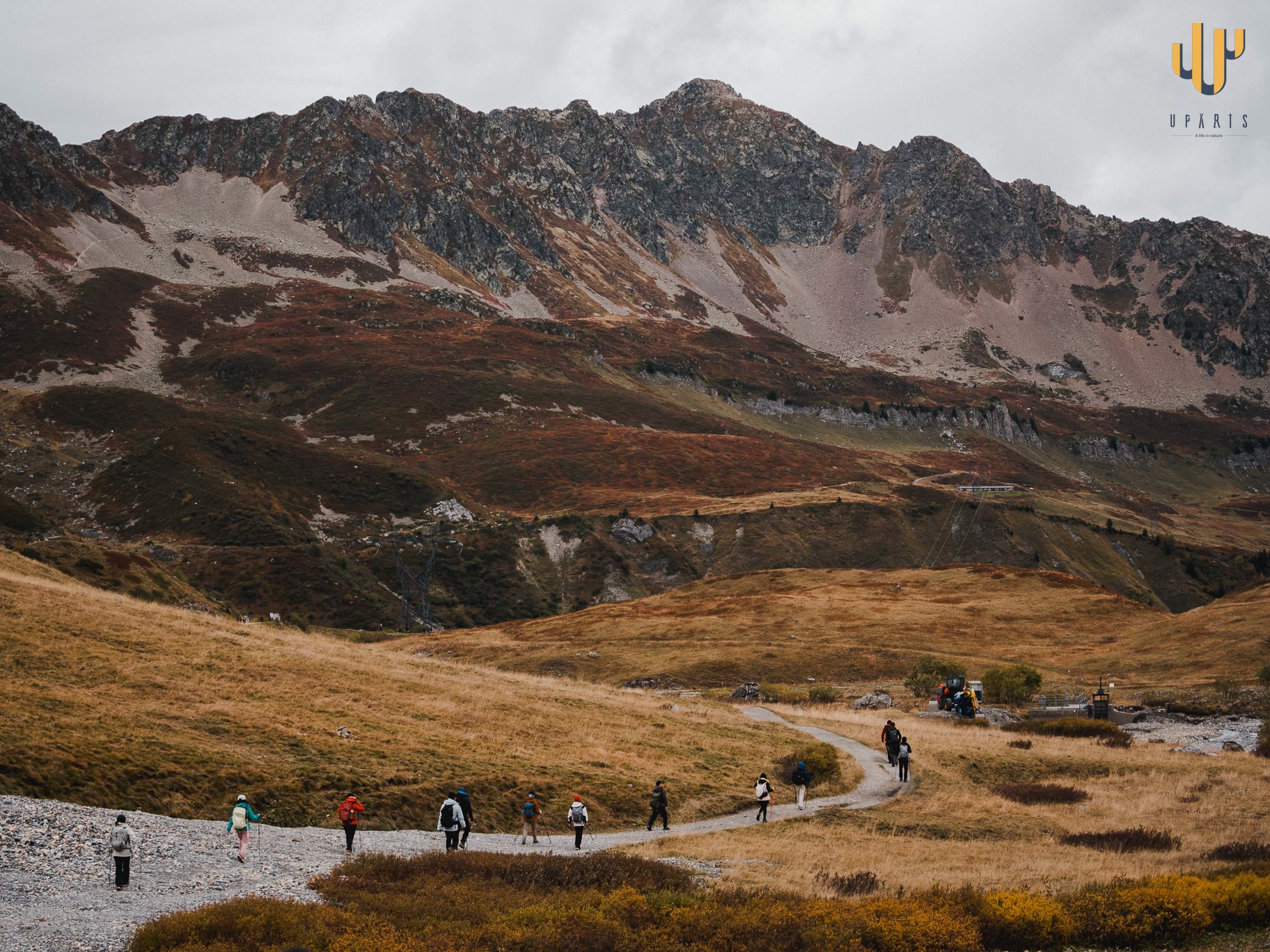
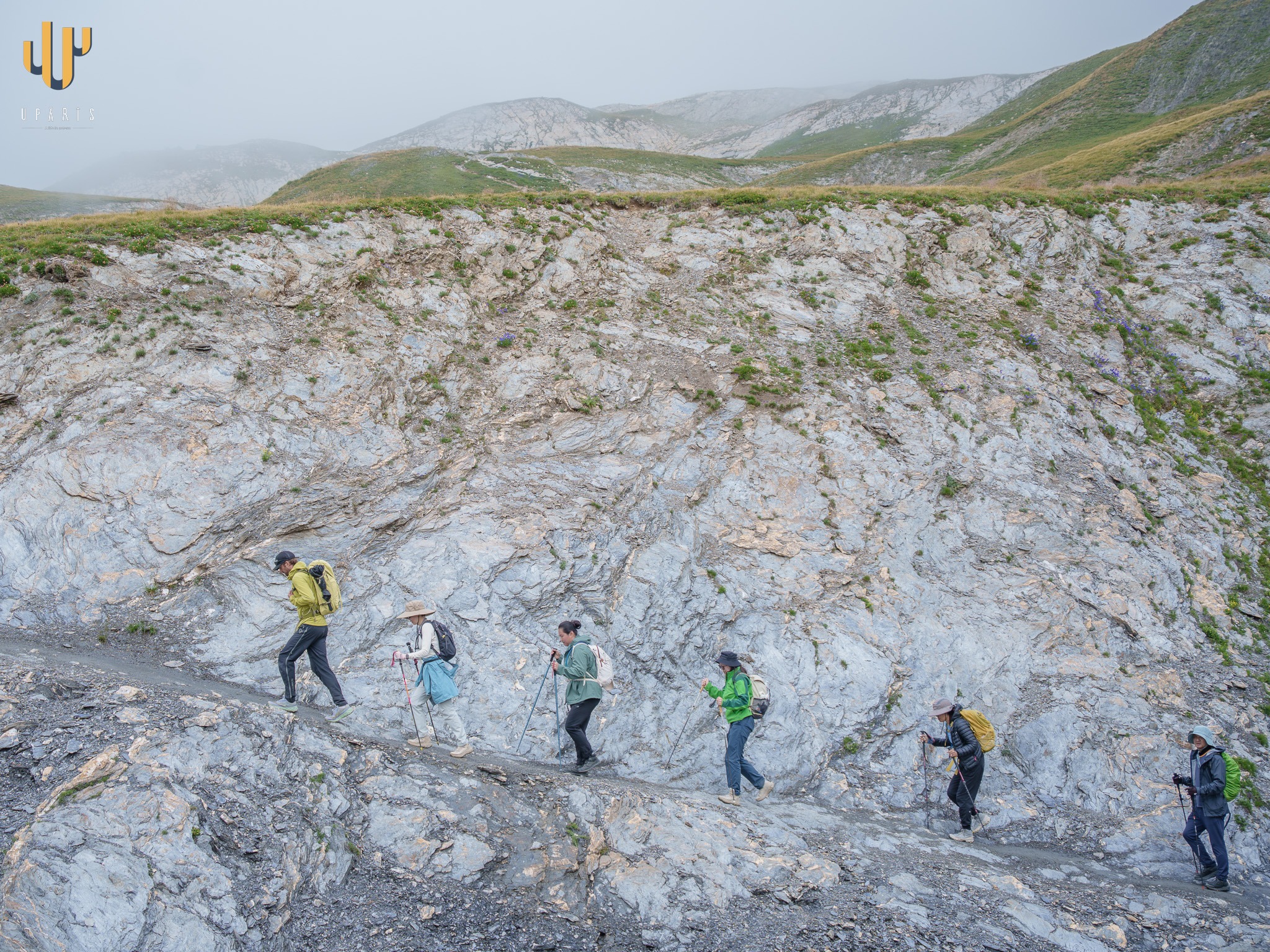
After breakfast, with your hiking gear for the day, a private transfer takes us to the Baroque church of Notre-Dame de la Gorge (alt. 1210m), built in 1699 at the head of the valley of Les Contamines-Montjoie (alt. 1161m), where today's walk begins. Today is the most challenging day of the whole trip.
We cross the legendary Pont Romain, an ancient thoroughfare linking the valleys and steeped in history, then pass the Refuge de Nant Borrant (alt. 1459m), more than a century old, whose name means "the place where the spring flows" and which has given warm shelter to countless travellers. Continuing up the valley past the Refuge de la Balme (alt. 1706m), we are surrounded by rolling mountains, babbling streams and mountain waterfalls.
After lunch we climb to the peaceful and majestic Col du Bonhomme (alt. 2329m), then traverse to the Col de la Croix du Bonhomme (alt. 2433m), far from the bustle of the city, where you can merge completely with nature. From there it is downhill all the way to the hamlet of Les Chapieux (alt. 1550m), where a private transfer takes us to the area around Bourg-Saint-Maurice (alt. 819m), where we check in at the hotel and have dinner.
Terrain: Forest + steep slope + broken-rock slope + alpine meadow
Notre-Dame de la Gorge – Col du Bonhomme – Les Chapieux
After breakfast, with your hiking gear for the day, a private transfer takes us to the Baroque church of Notre-Dame de la Gorge (alt. 1210m), built in 1699 at the head of the valley of Les Contamines-Montjoie (alt. 1161m), where today's walk begins. Today is the most challenging day of the whole trip.
We cross the legendary Pont Romain, an ancient thoroughfare linking the valleys and steeped in history, then pass the Refuge de Nant Borrant (alt. 1459m), more than a century old, whose name means "the place where the spring flows" and which has given warm shelter to countless travellers. Continuing up the valley past the Refuge de la Balme (alt. 1706m), we are surrounded by rolling mountains, babbling streams and mountain waterfalls.
After lunch we climb to the peaceful and majestic Col du Bonhomme (alt. 2329m), then traverse to the Col de la Croix du Bonhomme (alt. 2433m), far from the bustle of the city, where you can merge completely with nature. From there it is downhill all the way to the hamlet of Les Chapieux (alt. 1550m), where a private transfer takes us to the area around Bourg-Saint-Maurice (alt. 819m), where we check in at the hotel and have dinner.
Les Chapieux – Col de la Seigne – La Visaille
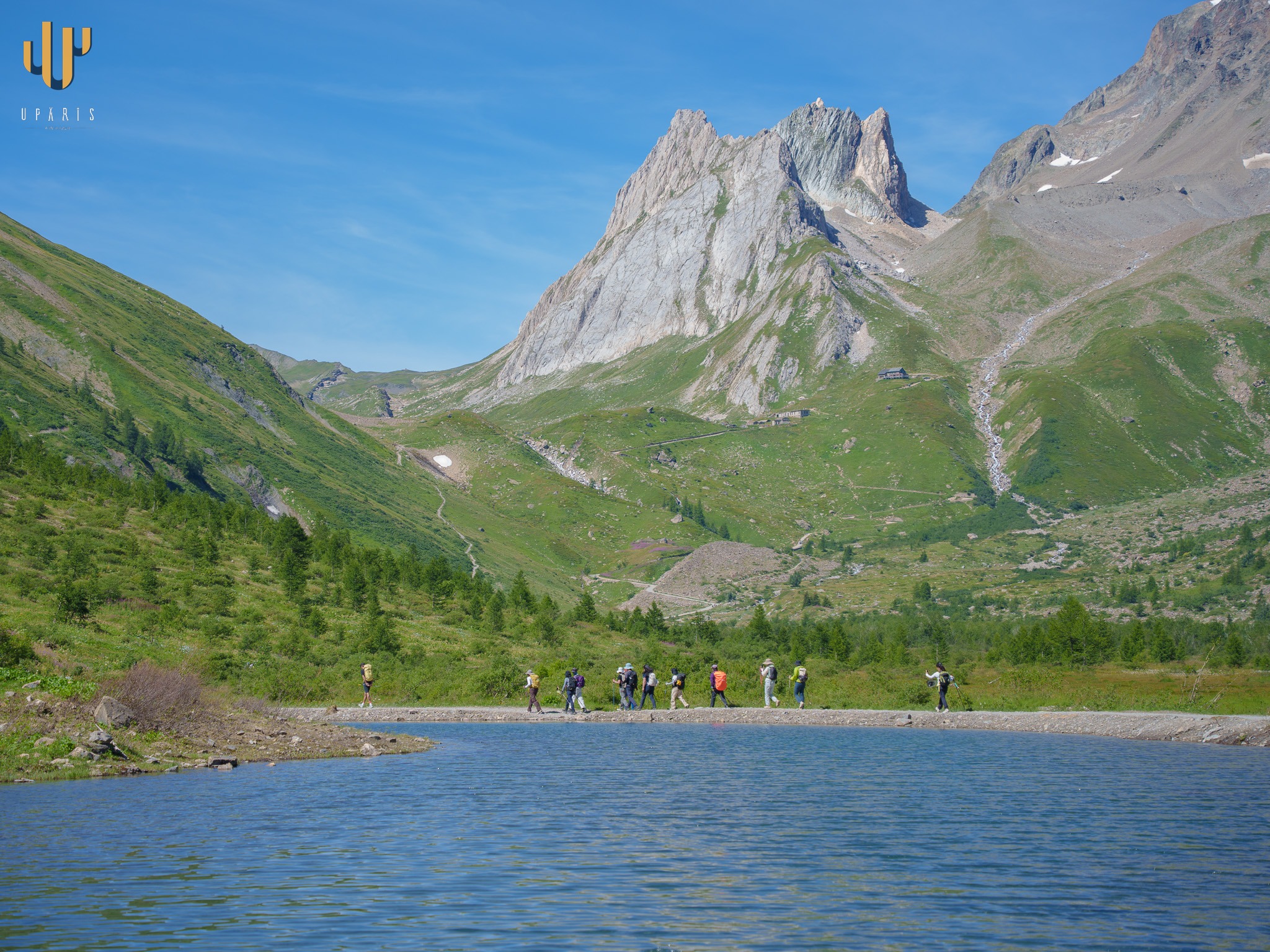
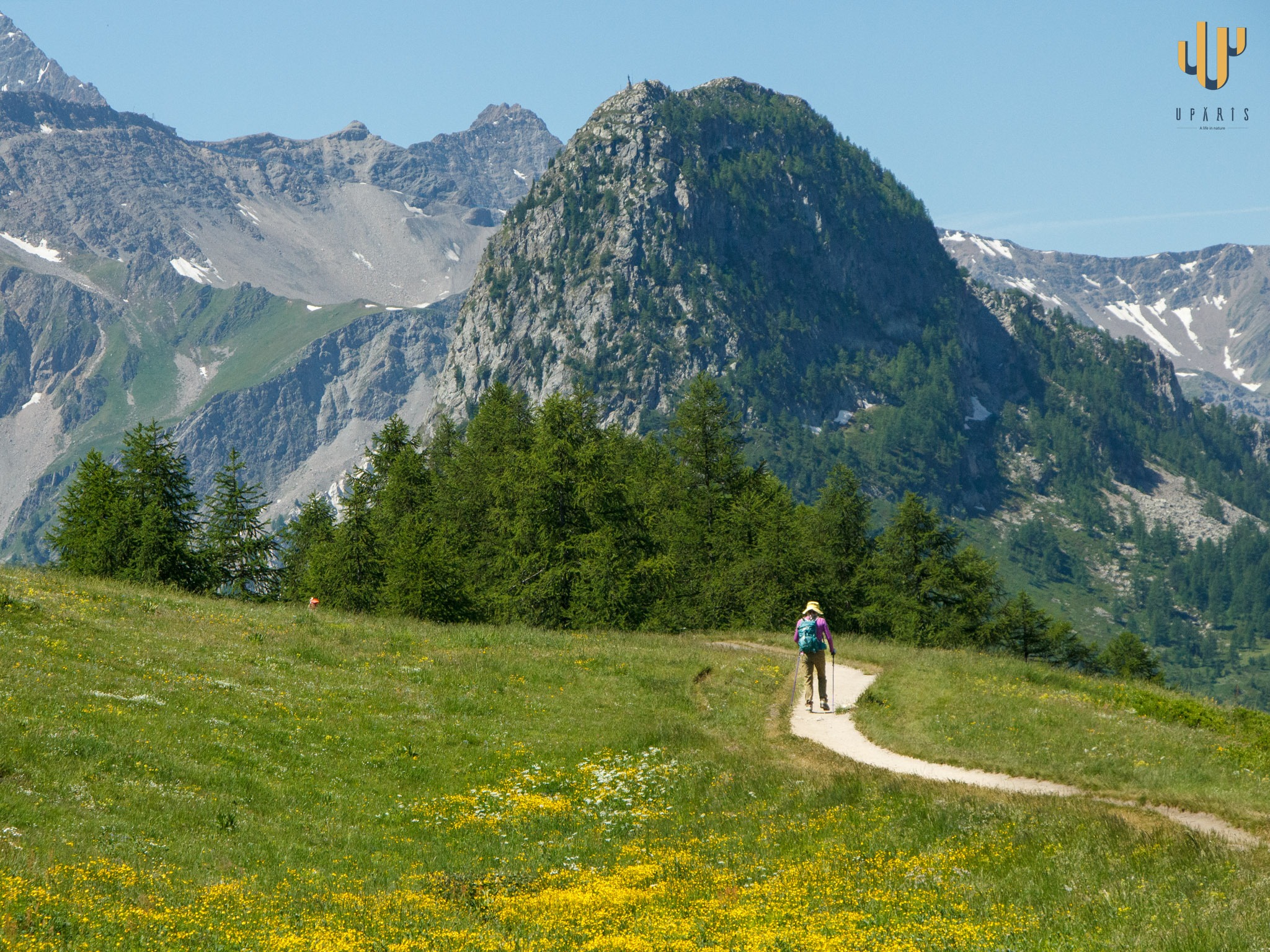
After breakfast a private transfer takes us back to Les Chapieux (alt. 1550m). We follow the valley path to La Ville des Glaciers (alt. 1789m) and, after passing the Refuge des Mottets (alt. 1868m), start to climb.
To the whistles of marmots we finally reach the Col de la Seigne (alt. 2516m), where the first thing to meet the eye is the boundary stone between France and Italy. Step past it into Italy and the vast glaciers and rock faces of the south side of Mont Blanc rise up before you; on the sharp peaks around the pass you can still see the observation posts dug by the Italian army during the Second World War, a clear record of the marks of history. On the way down we pass La Casermetta (alt. 2365m), the oldest military post on the Tour du Mont Blanc, now converted into a mountain museum, which you can visit free of charge if it happens to be open.
We then enter the Val Veny, pass the Rifugio Elisabetta (alt. 2195m) and reach the famous two-coloured lake, Lac de Combal (alt. 1968m): the water on either side is clearly different, crystal clear on one side and slightly cloudy with sediment on the other, creating a unique "two-tone" sight. Today's scenery is said to be among the most beautiful of the whole trek. Finally we reach La Visaille (alt. 1659m), and a private transfer takes us to Courmayeur (alt. 1224m), a small Italian town of great charm, where we check in at the hotel.
Terrain: Dirt track + alpine meadow + ridge
Les Chapieux – Col de la Seigne – La Visaille
After breakfast a private transfer takes us back to Les Chapieux (alt. 1550m). We follow the valley path to La Ville des Glaciers (alt. 1789m) and, after passing the Refuge des Mottets (alt. 1868m), start to climb.
To the whistles of marmots we finally reach the Col de la Seigne (alt. 2516m), where the first thing to meet the eye is the boundary stone between France and Italy. Step past it into Italy and the vast glaciers and rock faces of the south side of Mont Blanc rise up before you; on the sharp peaks around the pass you can still see the observation posts dug by the Italian army during the Second World War, a clear record of the marks of history. On the way down we pass La Casermetta (alt. 2365m), the oldest military post on the Tour du Mont Blanc, now converted into a mountain museum, which you can visit free of charge if it happens to be open.
We then enter the Val Veny, pass the Rifugio Elisabetta (alt. 2195m) and reach the famous two-coloured lake, Lac de Combal (alt. 1968m): the water on either side is clearly different, crystal clear on one side and slightly cloudy with sediment on the other, creating a unique "two-tone" sight. Today's scenery is said to be among the most beautiful of the whole trek. Finally we reach La Visaille (alt. 1659m), and a private transfer takes us to Courmayeur (alt. 1224m), a small Italian town of great charm, where we check in at the hotel.
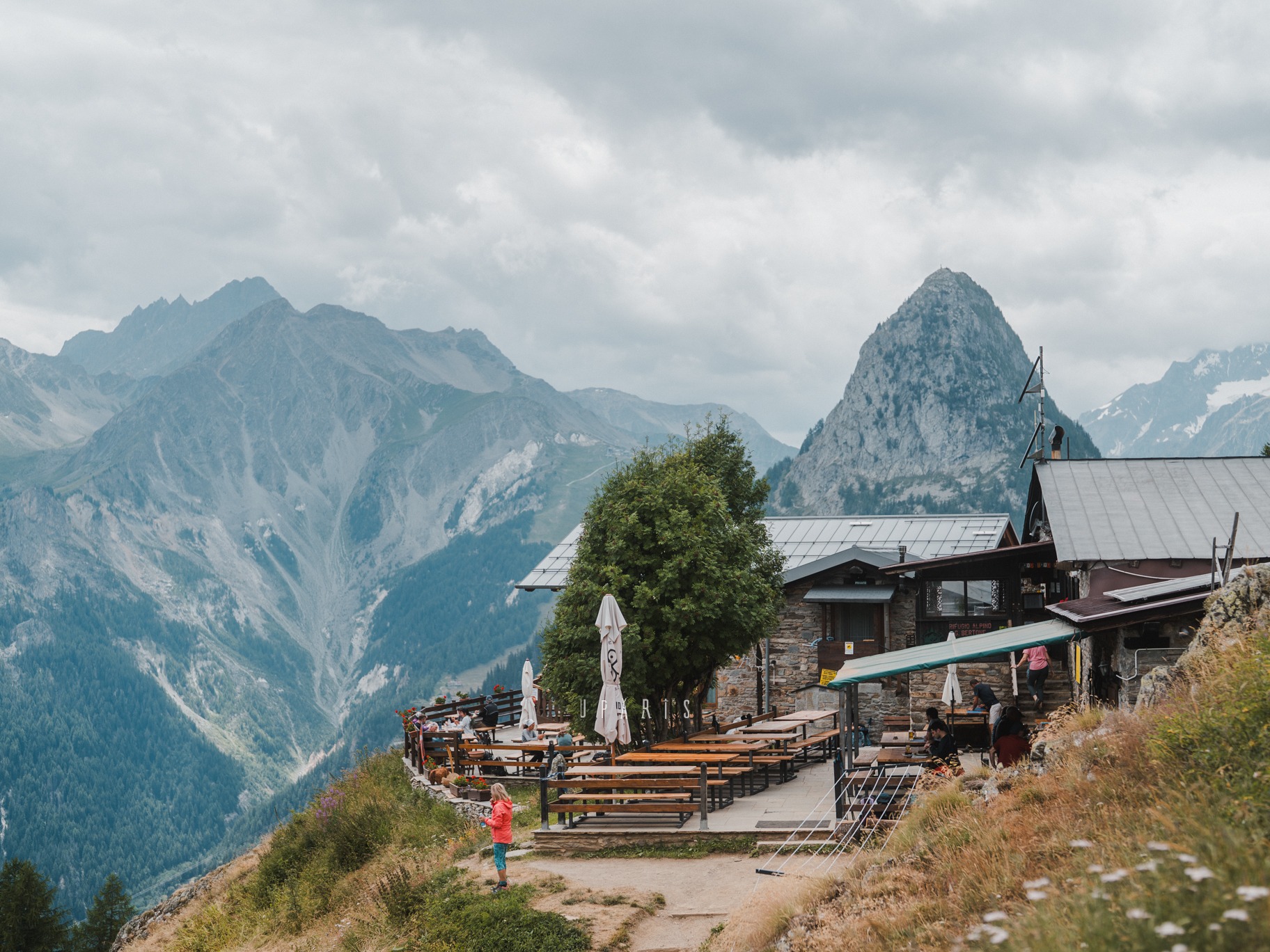
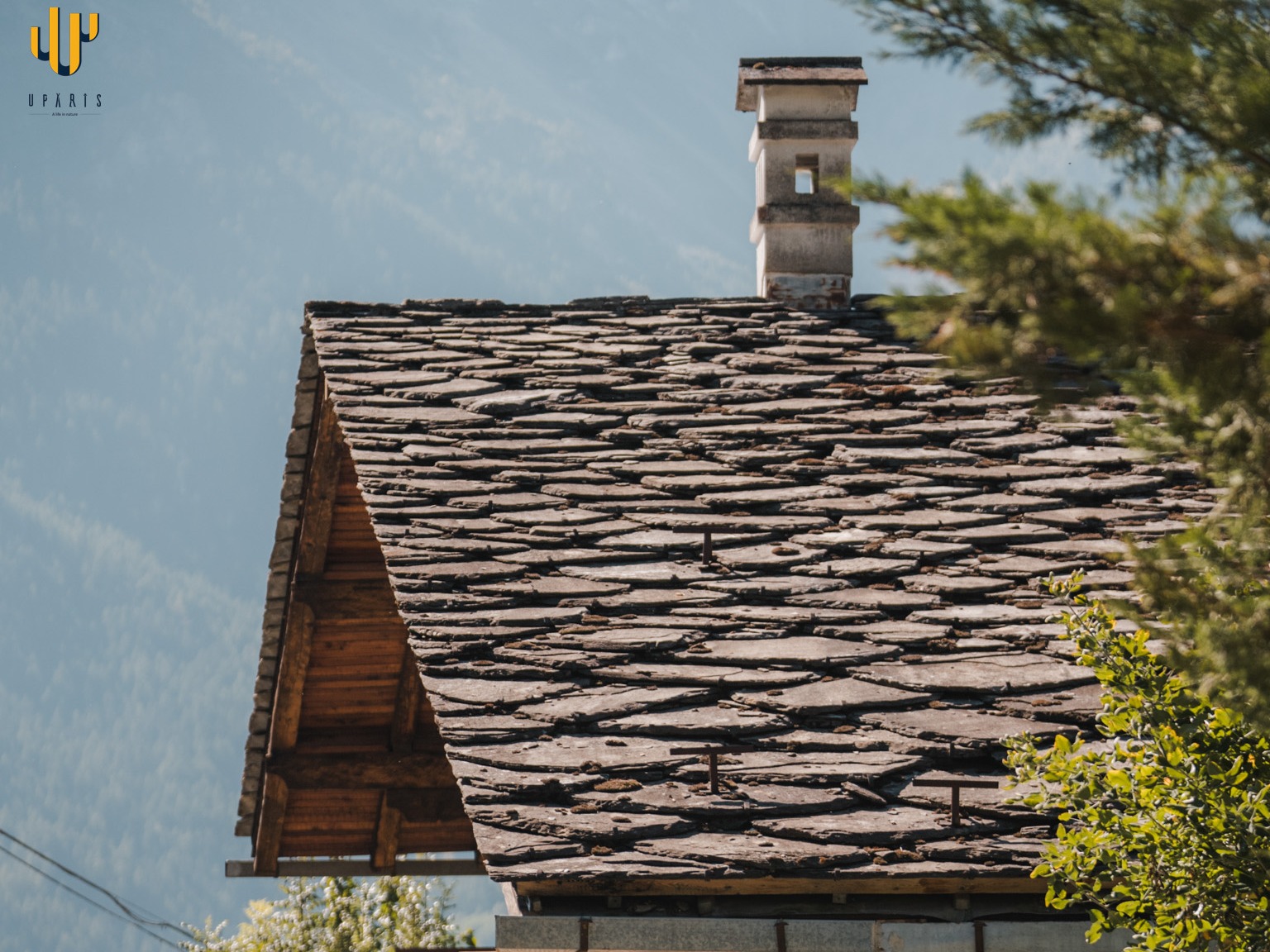
Planpincieux – Rifugio Bertone – Courmayeur
After breakfast we leave town and take a private transfer to Planpincieux (alt. 1588m), near Courmayeur (alt. 1224m), to start exploring the most classic Italian section of the TMB: along the flank of the Mont de la Saxe up to the Rifugio Bertone (alt. 1989m), then on to the viewpoint above the hut. From here you have a close view of the famous Grandes Jorasses (alt. 4208m) and the other face of Mont Blanc (alt. 4808m). We then walk all the way back down to Courmayeur.
If you feel tired, you may instead spend the whole day at leisure in Courmayeur: stroll through the town with a gelato in hand, or order an Italian espresso in the main square and enjoy a peaceful moment facing Mont Blanc. You can also pack a swimsuit and towel and go to the thermal spa at your own expense, to relax body and mind and ease the fatigue of several days' walking.
Terrain: Forest + alpine meadow + ridge
Planpincieux – Rifugio Bertone – Courmayeur
After breakfast we leave town and take a private transfer to Planpincieux (alt. 1588m), near Courmayeur (alt. 1224m), to start exploring the most classic Italian section of the TMB: along the flank of the Mont de la Saxe up to the Rifugio Bertone (alt. 1989m), then on to the viewpoint above the hut. From here you have a close view of the famous Grandes Jorasses (alt. 4208m) and the other face of Mont Blanc (alt. 4808m). We then walk all the way back down to Courmayeur.
If you feel tired, you may instead spend the whole day at leisure in Courmayeur: stroll through the town with a gelato in hand, or order an Italian espresso in the main square and enjoy a peaceful moment facing Mont Blanc. You can also pack a swimsuit and towel and go to the thermal spa at your own expense, to relax body and mind and ease the fatigue of several days' walking.
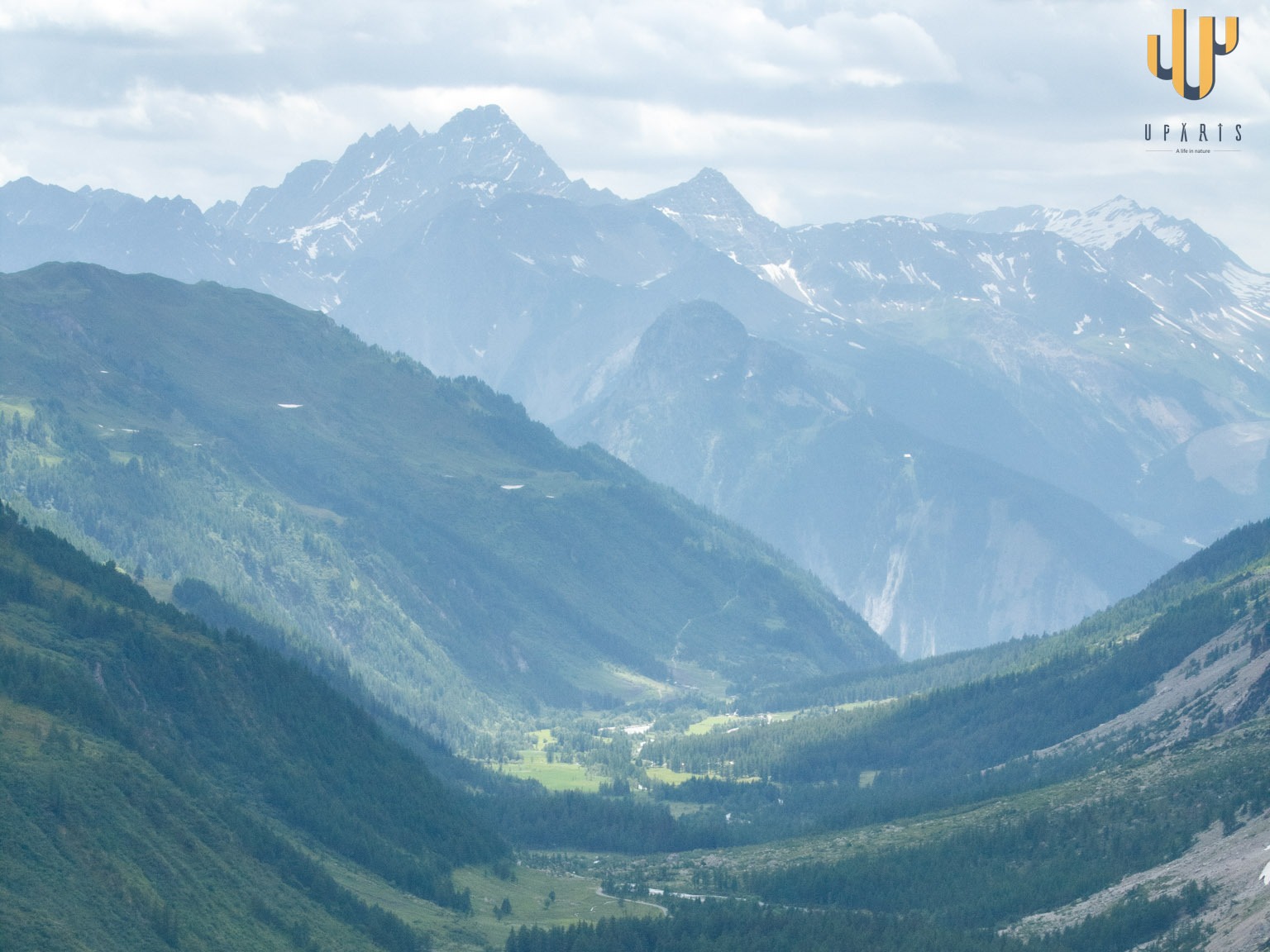
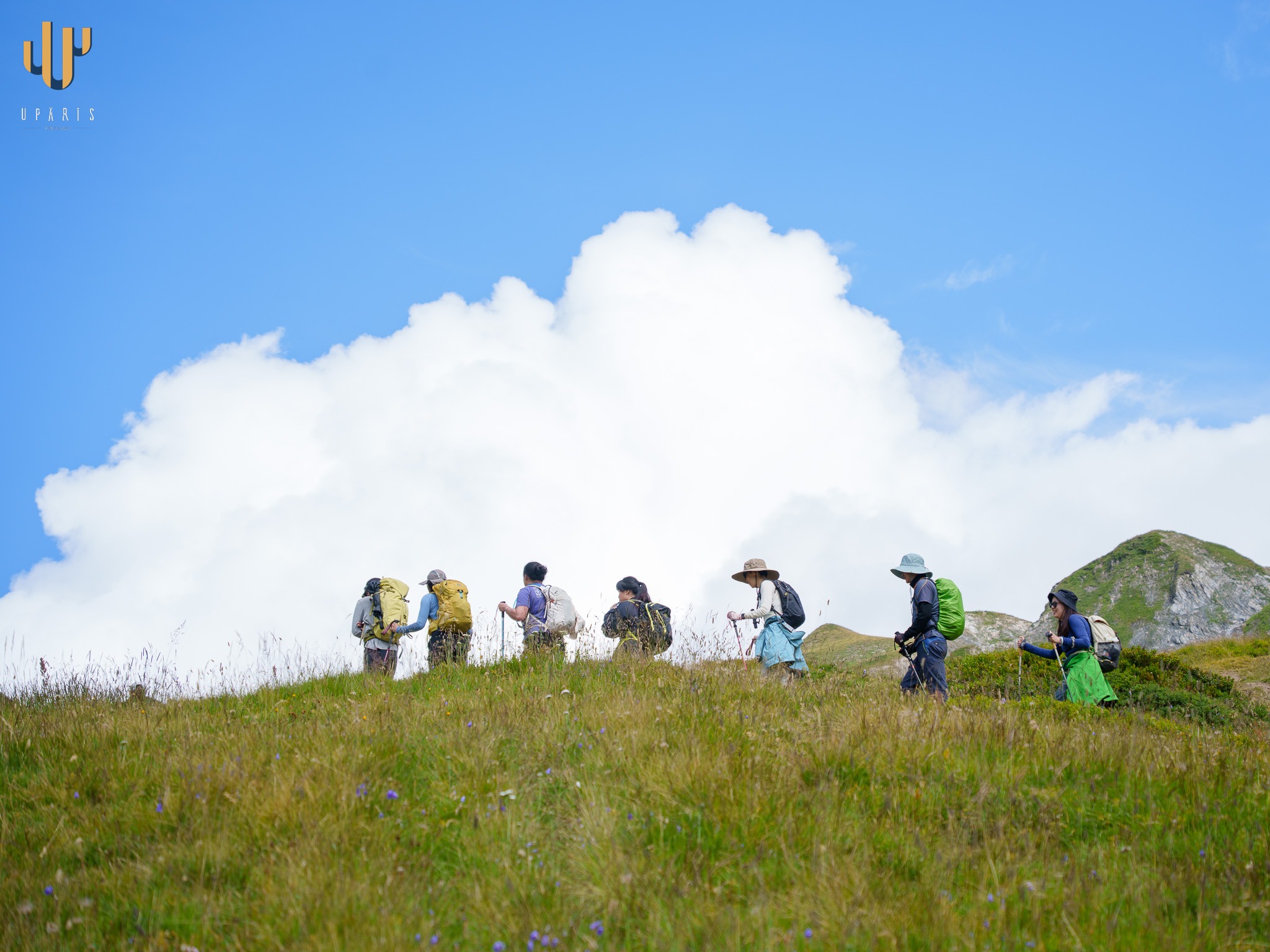
Arp Nouva – Col du Grand Ferret – Ferret
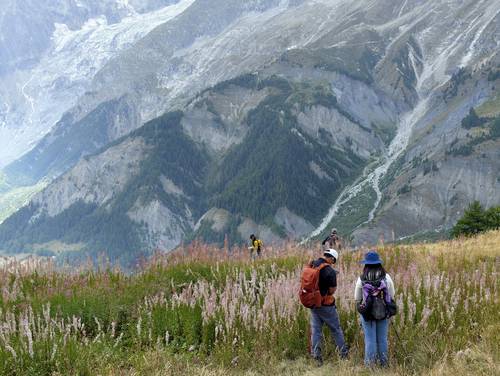
After breakfast a private transfer takes us to Arp Nouva (alt. 1770m), at the head of the Val Ferret, where the walk begins; along the way you may have the chance to see precious alpine plants such as edelweiss, alpine lilies and bladder campion close up.
Passing the Rifugio Elena (alt. 2062m), we climb all the way to the boundary stone on the Col du Grand Ferret (alt. 2537m), with Italy behind us and Switzerland ahead. From here you can take in the magnificent Glacier du Pré de Bar, the majestic Grandes Jorasses (alt. 4208m) in the distance, and Mont Dolent (alt. 3823m), where France, Italy and Switzerland meet.
After lunch we follow the path down past the pastures of La Peule (alt. 2071m), enjoying the peace of the Swiss alpine pastures, and finally reach the hamlet of Ferret (alt. 1699m). A private transfer then takes us to the small Swiss town of Orsières (alt. 887m), where we check in at the hotel and have dinner.
Terrain: Alpine meadow + broken-rock slope + ridge
Arp Nouva – Col du Grand Ferret – Ferret
After breakfast a private transfer takes us to Arp Nouva (alt. 1770m), at the head of the Val Ferret, where the walk begins; along the way you may have the chance to see precious alpine plants such as edelweiss, alpine lilies and bladder campion close up.
Passing the Rifugio Elena (alt. 2062m), we climb all the way to the boundary stone on the Col du Grand Ferret (alt. 2537m), with Italy behind us and Switzerland ahead. From here you can take in the magnificent Glacier du Pré de Bar, the majestic Grandes Jorasses (alt. 4208m) in the distance, and Mont Dolent (alt. 3823m), where France, Italy and Switzerland meet.
After lunch we follow the path down past the pastures of La Peule (alt. 2071m), enjoying the peace of the Swiss alpine pastures, and finally reach the hamlet of Ferret (alt. 1699m). A private transfer then takes us to the small Swiss town of Orsières (alt. 887m), where we check in at the hotel and have dinner.
Trient – Col de Balme – Le Buet
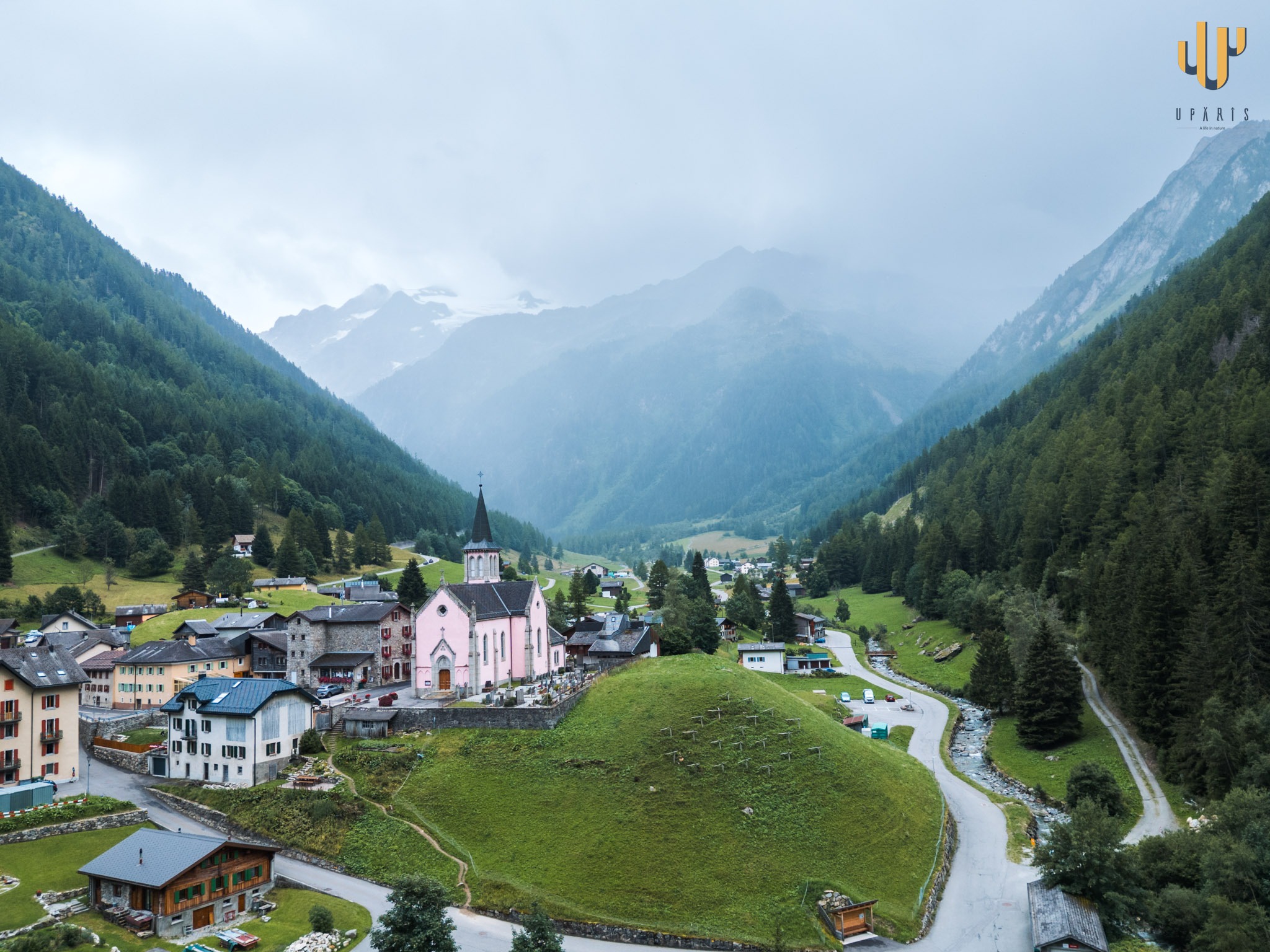
After breakfast a private transfer takes us to the small town of Trient (alt. 1300m), where the famous pink church stands quietly, and we start walking from here.
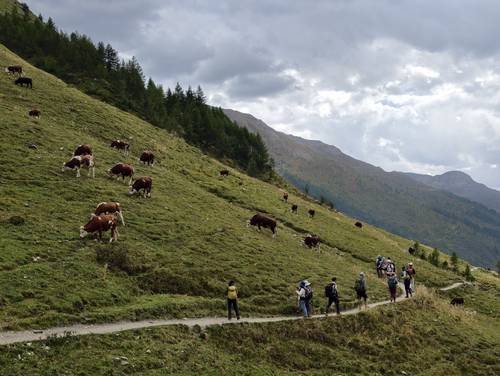
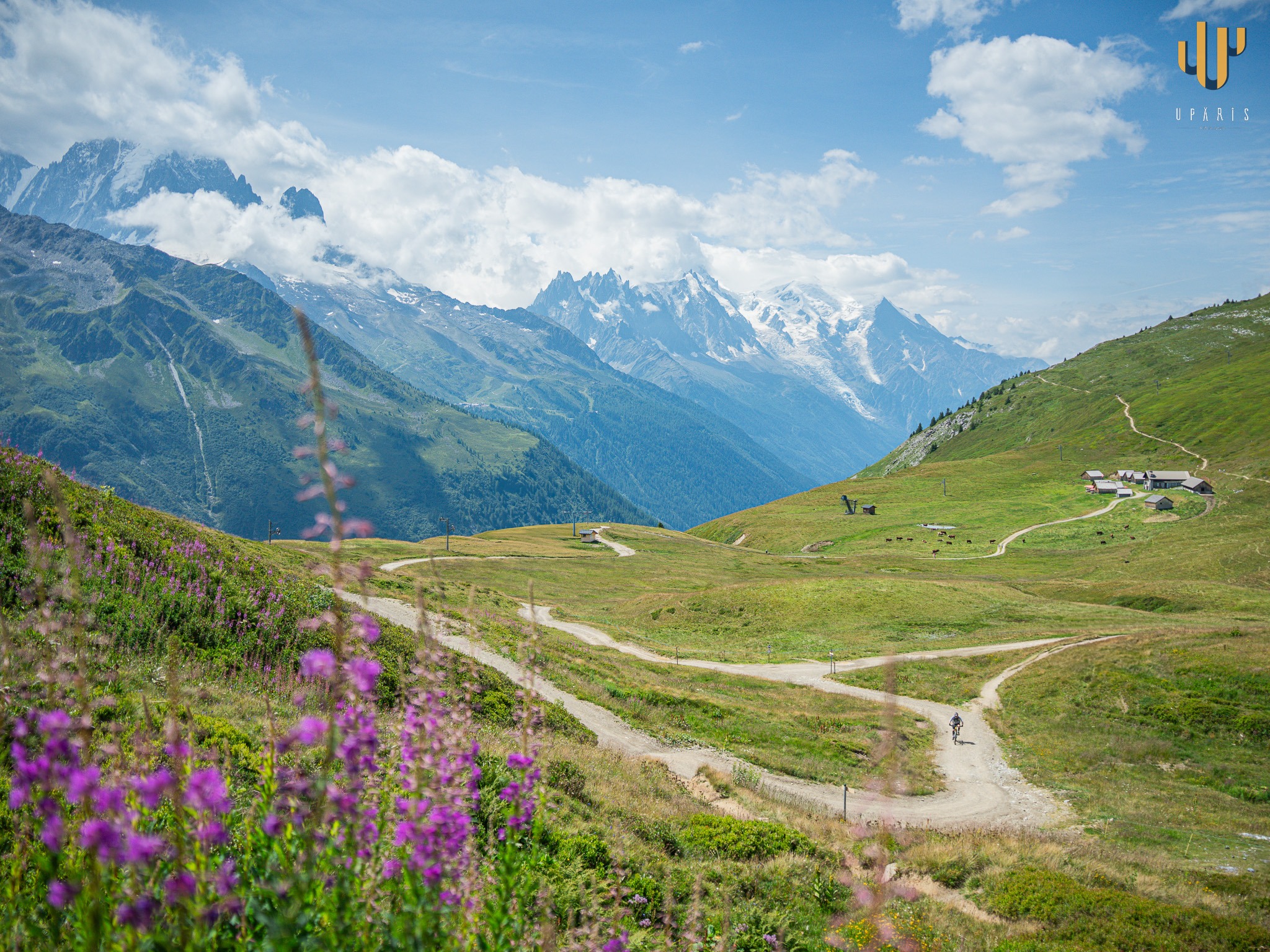
We climb gently along forest paths and through Swiss alpine pastures, the green slopes dotted with patches of colourful wild flowers, a picture of Swiss pastoral idyll. At last we reach the Col de Balme (alt. 2191m), on the border between Switzerland and France: behind us the peaceful Swiss mountains, ahead the romantic French landscape, with the splendour of Mont Blanc (alt. 4808m) and the Glacier du Tour unfolding before us.
After lunch we head down past the Col des Posettes (alt. 1997m), on a quiet and beautiful path whose open views let you take in the whole Chamonix Valley. We finally reach Le Buet (alt. 1340m) and check in at the mountain hut in Vallorcine (alt. 1256m), where we have dinner.
Terrain: Forest + alpine meadow + scree
Trient – Col de Balme – Le Buet
After breakfast a private transfer takes us to the small town of Trient (alt. 1300m), where the famous pink church stands quietly, and we start walking from here.
We climb gently along forest paths and through Swiss alpine pastures, the green slopes dotted with patches of colourful wild flowers, a picture of Swiss pastoral idyll. At last we reach the Col de Balme (alt. 2191m), on the border between Switzerland and France: behind us the peaceful Swiss mountains, ahead the romantic French landscape, with the splendour of Mont Blanc (alt. 4808m) and the Glacier du Tour unfolding before us.
After lunch we head down past the Col des Posettes (alt. 1997m), on a quiet and beautiful path whose open views let you take in the whole Chamonix Valley. We finally reach Le Buet (alt. 1340m) and check in at the mountain hut in Vallorcine (alt. 1256m), where we have dinner.
Le Buet – Lac Blanc – La Flégère
After breakfast we set off from the hut on foot, with no vehicle needed, following the valley path to Montroc (alt. 1382m), where the climb begins.
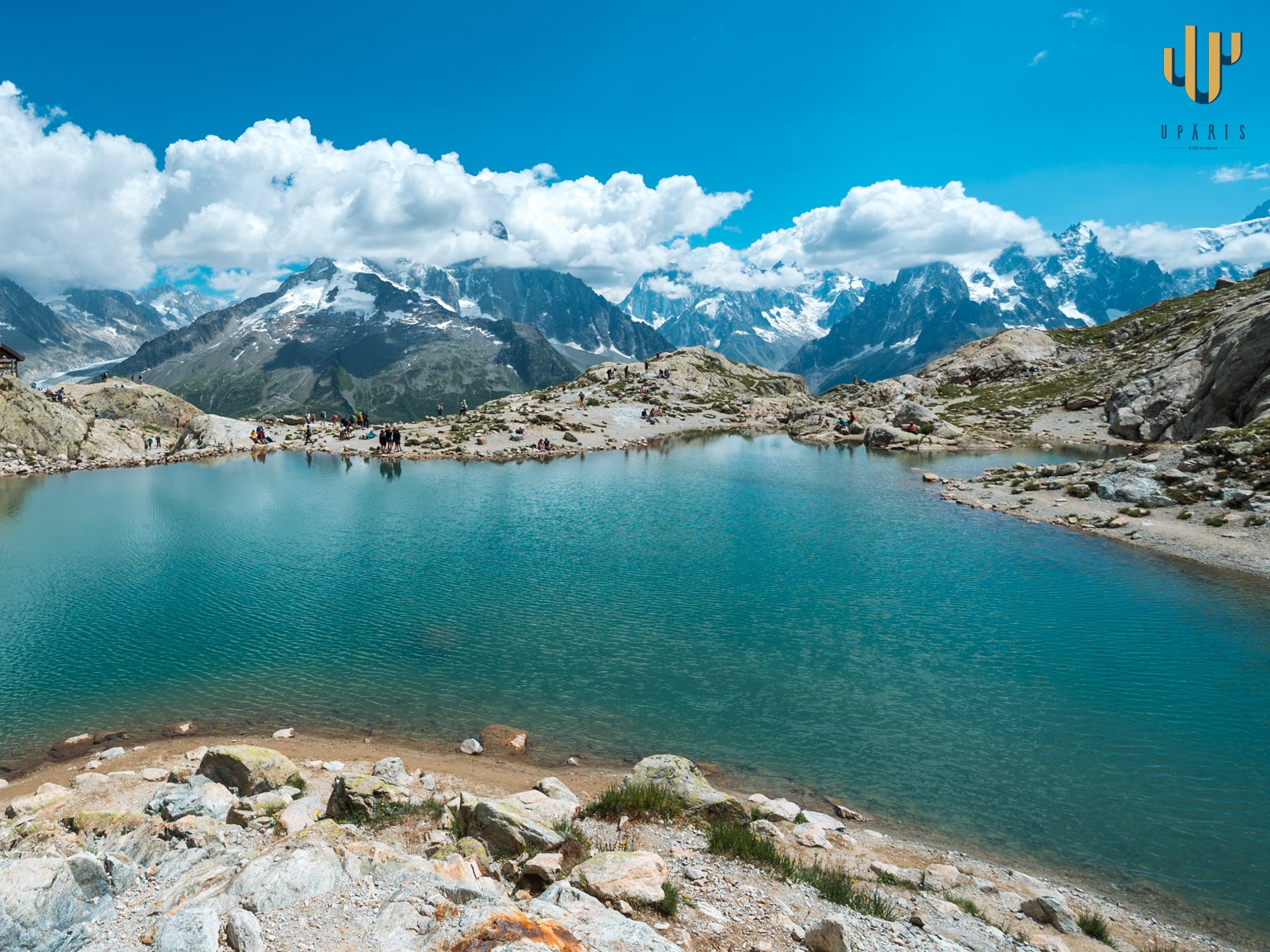
Climbing steadily along the mountainside path, we head for Lac Blanc (alt. 2352m)³, the most famous lake in the Alps, a picture-postcard sight not to be missed. From here you can gaze across at the full panorama of Mont Blanc (alt. 4808m), the Mer de Glace (alt. 1913m) and famous Alpine peaks: the Grandes Jorasses (alt. 4208m) and the Aiguille du Midi (alt. 3842m).
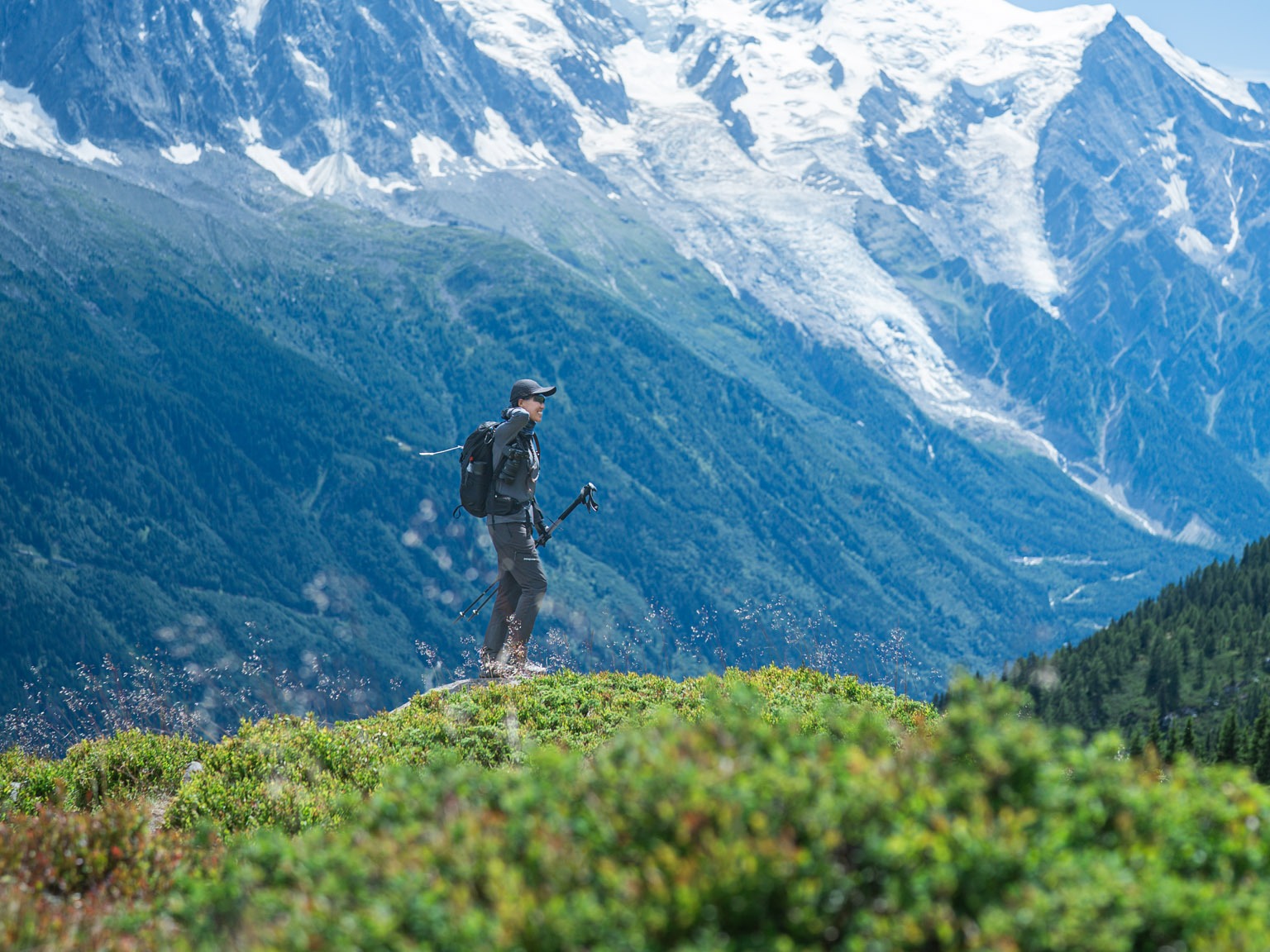
After lunch we follow the balcony path to La Flégère (alt. 1877m), with snowy peaks and glaciers along the way and, now and then, a paraglider drifting between the mountains. We then ride the Flégère cable car⁴ down to Les Praz (alt. 1060m) and take the Mont-Blanc Express back to Les Houches (alt. 1011m), where we check in at the hotel.
This is the last evening of the trip: why not choose a restaurant you like in the Chamonix Valley with your fellow hikers, to celebrate this journey across three countries.
Terrain: Forest + scree + ridge
Le Buet – Lac Blanc – La Flégère
After breakfast we set off from the hut on foot, with no vehicle needed, following the valley path to Montroc (alt. 1382m), where the climb begins.
Climbing steadily along the mountainside path, we head for Lac Blanc (alt. 2352m)³, the most famous lake in the Alps, a picture-postcard sight not to be missed. From here you can gaze across at the full panorama of Mont Blanc (alt. 4808m), the Mer de Glace (alt. 1913m) and famous Alpine peaks: the Grandes Jorasses (alt. 4208m) and the Aiguille du Midi (alt. 3842m).
After lunch we follow the balcony path to La Flégère (alt. 1877m), with snowy peaks and glaciers along the way and, now and then, a paraglider drifting between the mountains. We then ride the Flégère cable car⁴ down to Les Praz (alt. 1060m) and take the Mont-Blanc Express back to Les Houches (alt. 1011m), where we check in at the hotel.
This is the last evening of the trip: why not choose a restaurant you like in the Chamonix Valley with your fellow hikers, to celebrate this journey across three countries.
Departure day
Departure day: after breakfast the group disperses and everyone is free to go.
If you have plenty of time, you might consider the following activities, at your own expense.
- Aiguille du Midi cable car: ride the cable car up to the Aiguille du Midi for a spectacular panorama of the Mont Blanc massif. You come close to the grandeur of Western Europe's highest peak and can enjoy a 360-degree panorama of the Alps from the viewing platform. You can also try the glass viewing platform known as "Step into the Void" (Pas dans le Vide): standing on its transparent glass floor, with a thousand-metre abyss beneath your feet and the splendour of the Alps all around, you get the thrill of floating above the high mountains.
- Mer de Glace rack railway: take the historic Mer de Glace rack railway to the viewpoint over the Mer de Glace (alt. 1913m). Enjoy the beauty of the valley of Chamonix (alt. 1035m) on the way; at the terminus you can not only look down on the magnificent glacier but also go inside the ice cave and see for yourself the wonders shaped by the glacier over countless ages.
- Paragliding in the Alps: feel the thrill of flying above the snowy peaks, glaciers and forests of the Alps, looking down on majestic mountains and natural scenery.
- Thermal spa among the snowy peaks: at the foot of the mountains in Chamonix lies QC Terme, a spa paradise ringed by snowy peaks. From the outdoor infinity pool you can take in the splendid views of the Aiguille du Midi and Mont Blanc, with the quiet beauty of the Glacier des Bossons behind you.
Frequently asked questions
Which country's visa do I need?
Customers holding a passport or valid residence permit of a European Union country or territory, a United States, Canadian, Singaporean or Malaysian passport, or Hong Kong, Macao and Taiwan (China) passports may enter France, Italy and Switzerland without a visa: you only need to buy a flight to Geneva Airport (airport code: GVA) to begin your Tour du Mont Blanc trip.
For customers who need to apply for a Schengen visa (for example, holders of a mainland China passport), we strongly recommend applying for the Schengen visa as early as possible (the application can be submitted at the earliest 6 months before the start of the trip) and obtaining a valid Schengen visa more than 75 days before the start of the trip; we particularly recommend applying for a French Schengen visa, to ensure smooth entry.
Once you have signed up and paid in full online, the organiser will provide customers who need to apply for a Schengen visa with an official French-language itinerary and letter of invitation for this trip, to help the visa application go more smoothly.
What kind of insurance do I need?
We sell no insurance and the trip price includes none.
Each traveller must take out their own travel insurance covering the whole trip and meeting at least the minimum legal or regulatory requirements of the destination. For example, for a traveller who needs a Schengen visa: travel medical insurance of at least €30,000, valid throughout the Schengen area, covering repatriation for medical reasons, urgent medical care, emergency hospital treatment and death.
We also recommend cover suited to mountain activities (search and rescue, including helicopter rescue), as well as cancellation, assistance and personal liability insurance.
If you rely on the insurance that comes with your bank card, check with your bank or its insurer that the cover meets these minimum requirements, and note the emergency number.
Please give your insurer, policy number and emergency number in the pre-departure questionnaire, so the guide can help you reach them if needed.
See Article 15 of the General Terms and Conditions of Sale.
How difficult is the Tour du Mont Blanc?
This trail has been tried and tested over many years: rescue services, paths, waymarking and facilities are all very well developed. It is of moderate difficulty and suits most people; mountain hiking nevertheless carries inherent risks, so please follow the guide's arrangements.
Complete beginners are advised to consider taking part in the light of their own physical condition. Many past participants who had never done a long-distance trek of this kind followed about 2 to 3 months of regular, moderate-intensity training walks around their home city, challenged themselves and completed the whole route successfully. Building up your fitness in advance is very important: it lets you walk with ease during the trip and also enjoy the uplifting scenery and take photos to remember it by.
Our trips are joined almost exclusively by Chinese participants from all over the world, so you will not find yourself in the situation that arises when walking in a group with European and American hikers, where they are already over the top while we are still halfway up the slope, left far behind.
Our team of guides has more than ten years' experience, knows the Mont Blanc trails thoroughly and understands the pace and habits of Chinese participants. Rest stops are scheduled at regular intervals and, safety permitting, the guide will also thoughtfully allow reasonable time for photos, so that every participant can enjoy the trek to the full.
Why hike with a light pack?
Trekking with a full pack sounds cool, but participants need not only very good fitness but also plenty of outdoor experience to deal with all the complicated situations that may arise. It usually means carrying all your gear and supplies, which can be too gruelling for the ordinary hiking enthusiast.
Hiking with a light pack, by contrast, makes a trek far less difficult and suits a much wider range of hikers, beginners in particular. Reducing the weight on your back lessens the impact on the knees and other joints and makes it easier to enjoy the scenery along the way, so that walking and sightseeing go hand in hand.
To let participants enjoy the walking with greater ease, our trips include a dedicated luggage transfer service for your duffel bag. You simply hand over your duffel bag early in the morning, and we take care of delivering it safely to that day's accommodation. On the trail you carry only the essentials, such as the day's lunch and water, which greatly reduces the weight on your back and makes hiking a relaxed and pleasant experience.
How does the luggage transfer for the duffel bag work?
Our trips come with a dedicated luggage transfer service for your duffel bag: hand it over early in the morning and collect it in the afternoon at that night's accommodation. On the trail you only need to carry essentials such as the day's lunch and water, and can walk at ease.
You must pack all your belongings into two bags: a small rucksack to carry with you and a duffel bag for the luggage transfer (either a duffel bag or a large rucksack will do).
- Rucksack: a hiking rucksack of about 30 litres, convenient for carrying your personal items during the day's walk.
- Duffel bag for the luggage transfer (either a duffel bag or a large rucksack will do): everything else goes in here; it is carried by a dedicated vehicle to the accommodation where you stay each night, so that you can get at it after each day's walk.
Special notes on the duffel bag: please note that the duffel bag is carried by the logistics vehicle stage by stage, all the way to the place where the trek ends. Your spare items should go in one duffel bag (either a duffel bag or a large rucksack will do) weighing no more than 15 kilograms and no more than 85 centimetres at its longest; if the bag does not comply with the rules, the driver will refuse to carry it, and the customer bears the consequences.
How does suitcase storage work?
We offer a suitcase storage service, starting from your accommodation on the morning of Day 2; the stored suitcase is delivered to your accommodation for that night before 6 pm on Day 7.
On the Essential edition, storage of 1 suitcase is free of charge; if you need to store more, please contact customer service in advance.
Maximum size of a stored suitcase: the sum of its length, width and height must not exceed 158 centimetres or 62 inches, and its weight must not exceed 23kg, in line with the checked-baggage standard for international flights.
What is the accommodation like?
2 nights in 4-star hotels · the town is the view: 2 consecutive nights in a 4-star hotel in Courmayeur, with restaurants and boutiques within walking distance and the peaks in view as soon as you look up.
4 selected nights · mountain style: 1 night at each end in Les Houches and 1 night in the Bourg-Saint-Maurice area in 3-star hotels, and 1 night in a 2-star hotel in the small Swiss town of Orsières, which stand out for their local flavour and human warmth.
1 night in a hut · mountain warmth: on night 6 we stay in a mountain hut at Le Buet in Vallorcine, in 4-bed rooms with an individual bed for everyone, breakfast and dinner included.
A balance of walking × resting: tread the ridges by day and enjoy the rest of a mountain town by night, gathering the scenery underfoot and setting everyday life at your window.
Double room as standard: the trip price is based on two adults sharing one room; hotel double rooms are set up with twin beds by default; in a twin room each bed is about 90 cm wide.
Converted traditional buildings: most of the hotels are upgraded historic buildings; the rooms are relatively compact, and the experience centres on cleanliness, tidiness, warmth and comfort.
Environmental policy: in keeping with European environmental principles, most hotels do not provide disposable toiletries (toothbrush, toothpaste, slippers, etc.); please bring your own.
Sockets and charging: sockets are generally of the European standard, with no Type-C/USB direct-charging ports; we recommend bringing a European-standard travel adapter and an extension lead, convenient for charging several devices.
How are rooms allocated?
Standard occupancy: on D1–D5 and D7, two adults share one double room (one bed each); on D6 we stay in 4-bed rooms in a mountain hut.
Same-sex room sharing: participants who sign up alone are, by default, paired with a roommate of the same sex; if the gender ratio or room availability makes sharing impossible, a single supplement must be paid.
Single occupancy: if you want a room to yourself, please buy the single supplement when signing up (the 4-bed room on D6 is not available for single occupancy); if in the end it cannot be arranged because of limited room availability, the corresponding amount will be refunded by the original payment method before departure.
4-bed rooms: individual bed for everyone, shared with members of your own group; we allocate rooms by gender as a priority, and whether a room is mixed depends on the ratio of men to women in the group on each departure.
Advice and tips: June–September is the high season and single rooms are especially scarce; to secure the room type you want, we recommend signing up as early as possible.
What about lunch and dinner?
We do not provide lunch for the whole group, for a very simple reason: so that you eat fresher, more comfortable and better-quality food.
Trips that offer "apparently all-inclusive value" cannot transport fresh food in a cold chain, so they usually hand out instant pasta, tinned salad or fruit that has sat for days in the heat: a strong processed taste, a poor texture and questionable food safety.
You deserve a better choice.
We want every one of your lunches to be a memorable part of the journey: order a hot local dish at a mountain hut, looking out over snowy peaks and meadows; or buy the food you like on the day, or order a picnic box the evening before and collect it the next day, to eat by a lake or on a grassy slope, sharing your meal with nature.
This arrangement is fresh, flexible and light, at a cost of about €15 per meal, and lets you truly experience the essence of hiking in the Alps: freedom, authenticity and the pleasure of eating in the company of nature.
Dinner: dinners on the three evenings of D2, D5 and D6 are included in the trip price and served at that night's hotel or hut; dinners on D1, D3, D4 and D7 are at your own expense: you are free to sample the local specialities at your hotel or at a nearby restaurant; dinner generally costs about €30 per person per meal.
These flexible and varied meal arrangements not only free you from the constraints of the fixed set menus of traditional tour groups but also let you choose freely according to your own taste and budget: you eat with more freedom, the costs are more transparent, and you also enjoy the unique experience of the local specialities.
What safety rules should I follow on the trek?
Hiking in the Alps is a challenge that calls for self-discipline and team spirit. To ensure safety and a smooth trip, you must observe the following principles:
- Follow the guide's instructions for safe progress: our professional guide will adjust the route and walking pace flexibly according to the participants' physical condition, changes in the weather and the terrain, without affecting the overall itinerary. All participants must strictly follow the guide's arrangements, including the use of equipment, the order of the group and departure times. Where needed, the guide will teach practical techniques such as how to use trekking poles and how to adjust your pace uphill and downhill, helping you to move more efficiently while staying safe.
- Move as a team, no leaving the group alone: on the Tour du Mont Blanc, the safety of the team is the first principle. On the trail, all members must stay together; leaving the group without permission or going off alone is forbidden. The team takes the pace of its slowest member as the pace of the whole group, and the guide will pay particular attention to slower participants and do their best to help every member reach the destination safely.
- Safety decisions and emergency adjustments: when something unexpected arises, such as heavy rain, thick fog, a thunderstorm or the group falling clearly behind schedule, the guide will make a professional assessment based on the situation at the time and has the right to alter or shorten the route in order to protect everyone's safety. If an individual member's lack of fitness seriously affects the itinerary, the guide may require that member to drop out of part of the route for the time being and travel to the next stop with the help of the luggage transfer vehicle; such additional costs are borne by the individual.
- Respect and team spirit: a trek in the Alps is a shared walk between people and nature, and between one person and another. Please treat your fellow participants with respect, tolerance and support, and keep up a good atmosphere in the team. Please understand that the guide's job is to ensure safety and coordination, not to act as a personal assistant or private attendant.
- Physical and mental preparation: before departure, please assess your own physical condition thoroughly and train in advance for endurance and for carrying a load, so as to get used to the rhythm of walking day after day and on slopes. Good fitness and a positive attitude are the key to completing the TMB safely.
What gear do I need to prepare?
- Clothing: waterproof hardshell jacket, technical T-shirts, waterproof trousers, fleece / light down jacket, convertible hiking trousers, sports underwear, hiking socks
- Footwear / other: mid- or high-cut hiking boots, slippers, sunglasses, sun hat / warm hat, warm / sun-protection gloves, crampons (essential for hiking in June), rain poncho
- Toiletries: quick-dry towel, shower gel / shampoo / soap / toothbrush and toothpaste (hotels do not provide toiletries), lip balm, sun cream, after-sun cream / face mask
- Personal first-aid kit: the medication you need every day, painkillers, anti-inflammatories, stomach medicine, plasters, blister plasters, elastic bandage, insect repellent spray, etc.
- Other essentials: sleeping bag liner, rucksack (30L), dry bag, trekking poles, soft duffel bag for the luggage transfer, earplugs, knee supports, universal travel adapter, anti-chafing protection for the feet (such as Compeed), hairdryer, portable kettle
Specific advice on buying gear and other such information will be shared in the group chat after you sign up.
What is the most beautiful season on the Tour du Mont Blanc?
Mid-June to early July is the beginning of spring in the Alps. Around Mont Blanc the ice and snow gradually melt and the spring flowers vie with one another to bloom, the green mountain grass setting off the remaining white snow. There may still be snow on sections at 2,000 metres, so light crampons need to be carried and a certain level of fitness is required. Hiking at this time has a charm all of its own: the Alpine spring in limited edition.
From mid-July to August, at the height of summer, colourful flowers bloom all over the mountains, while Mont Blanc remains clad in gleaming white snow. The wild blueberries in the valleys ripen, a wonderful treat for hikers to taste. In the sunshine the age-old glaciers sparkle and shine among the mountains. The weather is relatively stable during this period, which makes it the season hikers favour most.
In the autumn, which begins in September, the mountains start to take on their many-coloured autumn tints, while the distant snowy peaks and glaciers still stand out. The autumn grass gradually turns yellow, dotted with flowering autumn crocuses; in the golden sunlight the valleys put on their splendid autumn dress and the scenery around Mont Blanc is especially enchanting. This is the best time to admire the distinctive autumn landscape of the Alps.
How are the photos taken during the trip used?
On some trips the trip leader or the UPARIS team may take photos or videos. When a photographer comes along, we share a selection with the participants free of charge after the trip, through a download link or a private album, for their personal use (terms of sale 17.2).
We use photos or videos in which you can be recognised for promotion (website, social media, brochures…) only with your prior consent: you may tick the box for it when you book, or leave it unticked — refusing has no effect on your trip (terms of sale 17.3).
You can withdraw your consent at any time from your account or by writing to contact@uparis.org, and ask us to delete the content concerning you (terms of sale 17.5).
Weather Forecast
Accommodation
- 6 nights in hotels, 1 night in a mountain hut
- 4 nights in France, 2 nights in Italy, 1 night in Switzerland
Price details
Price includes:
- 3 nights in a double room in a 3-star hotel (D1 and D7 in Les Houches, D2 in the Bourg-Saint-Maurice area)
- 2 nights in a double room in a 4-star hotel (D3, D4 in Courmayeur)
- 1 night in a double room in a 2-star hotel (D5 in Orsières, Switzerland)
- 1 night in a 4-bed room in a mountain hut (D6 in Vallorcine, individual bed for everyone)
- 7 breakfasts
- 3 dinners (D2, D5 and D6)
- D2 private transfers in France (Les Houches → Notre-Dame de la Gorge, Les Chapieux → hotel)
- D3 private transfers in France and Italy (hotel → Les Chapieux, La Visaille → Courmayeur)
- D4 private transfer in Italy (Courmayeur → Planpincieux)
- D5 private transfers in Italy and Switzerland (Courmayeur → Arp Nouva, Ferret → Orsières)
- D6 private transfer in Switzerland (Orsières → Trient)
- D7 Flégère cable car ticket down (while the cable car is running) and Mont-Blanc Express fares within the Chamonix Valley
- And the transport costs mentioned in the itinerary that arise from changes of accommodation
- 1 French state-certified mountain leader
- Luggage transfer service for the duffel bag (1 duffel bag per person / 15kg Please note: if the duffel bag is overweight, the driver will refuse to carry it, and the customer bears the consequences)
- Suitcase storage (1 suitcase per person free of charge, up to 23 kg)
Price does not include:
- Each participant's transport to and from Les Houches, where the group meets and disperses (this edition does not include Geneva Airport transfers)
- Each participant's personal hiking gear
- Each participant's travel visa fees
- Each participant's travel insurance
- Lunches during the trip (you can eat in at a mountain hut with fine views along the trail, or order a picnic box at the hotel where you stay the night before; about €15 per meal)
- Dinners on D1, D3, D4 and D7 (you are free to sample the local specialities at the hotel or at a nearby restaurant; dinner generally costs about €30 per person per meal)
- Personal alcoholic and soft drinks with meals
- Use of the logistics support vehicle if a participant gives up walking part-way for personal reasons (optional, at your own expense, about €50 per person per leg)
- Tip for the guide (not compulsory; suggested amount €30–50 per person for the whole trip)
- Aiguille du Midi cable car ticket and participants' free-time activities during the trip (paragliding, thermal spa, etc.)
- Accommodation on D1–D5 and D7 is in double rooms (the 4-bed room on D6 is not available for single occupancy). For guests who sign up alone, we will do our best to arrange room sharing with a group member of the same sex; if no room share can be arranged, the single supplement must be paid (the amount shown on the booking page applies)
- Any other item not stated as included, and personal expenses
- Additional costs caused by force majeure (such as natural disasters, epidemics, war, strikes, visa delay, flight delay or cancellation, etc.)
- Chinese interpreting (not included in this trip)
Booking conditions
Cancellation conditions
Fees kept if the client cancels, by the date of the request (current schedule, Terms of sale, art. 10):
- 76 days or more before departure: Full refund
- 41 to 75 days before departure: 70% cancellation fee
- 40 days or less before departure: No refund
If you cancel, invitation letter fees (30€ per letter issued) are not refunded; they are refunded if we cancel the trip or if you terminate the contract under Article 10.7 of the terms of sale because of exceptional and unavoidable circumstances.
Exceptional and unavoidable circumstances must meet all three of the following conditions: (1) they occur in the trip's activity area or its immediate vicinity; (2) they significantly affect the performance of the trip or transport to that area; (3) they are beyond the control of the party invoking them and could not have been avoided even if all reasonable measures had been taken. Reasons personal to the customer (such as health, visa, personal flights or changes of schedule) are not such circumstances.
Terms of saleStandard information form (package travel)
The legal form about your rights for package travel, to read before booking.
Standard information form (package travel)Important information
Passport requirements
- Switzerland: your passport must still be valid 3 months after you leave.
- France: your passport must still be valid 3 months after you leave.
- Italy: your passport must still be valid 3 months after you leave.
- Our general requirement is a passport valid for at least 3 months after the end of the trip; the strictest of these requirements applies.
- When you book, we state the day your passport must be valid until for the departure you choose.
General information
Before you sign up
Up to 14 travellers per group; Age requirement: 15 to 65 Applicants over 60 must confirm that they are in good physical condition; Minors under 18 must travel accompanied by a legal or authorised guardian and may not sign up on their own. Information required: when signing up, please be sure to provide accurate and complete personal details (name, sex, date of birth, contact details, etc.). Health requirements: participants should be in good physical condition and able to cope with the physical effort of several consecutive days of hiking. We advise against signing up in the following cases, including but not limited to: serious cardiovascular or cerebrovascular disease, pulmonary oedema, epilepsy, severe depression, recovery from major surgery, pregnancy, reduced mobility, or any other case in which a doctor advises against long-distance hiking. This is a fixed-group trekking product. To protect the experience and safety of your fellow participants, please tell us of your own accord, and truthfully, about your state of health before departure. Please conceal nothing; if an accident results from doing so, the responsibility is your own. If incorrect information supplied by you causes a booking error or disrupts the trip, the responsibility is your own. The travel agency is entitled, on the basis of its assessment of an applicant's health and of safety considerations, to recommend adjustments or to refuse participation.